Wyoming Reclaims Lead Role in Yellowstone Water Regulation
Interior Secretary Doug Burgum and Gov. Mark Gordon finalized a deal returning primary Clean Water Act enforcement to the state after a multi-year federal dispute.
By Fatima Saleh ·
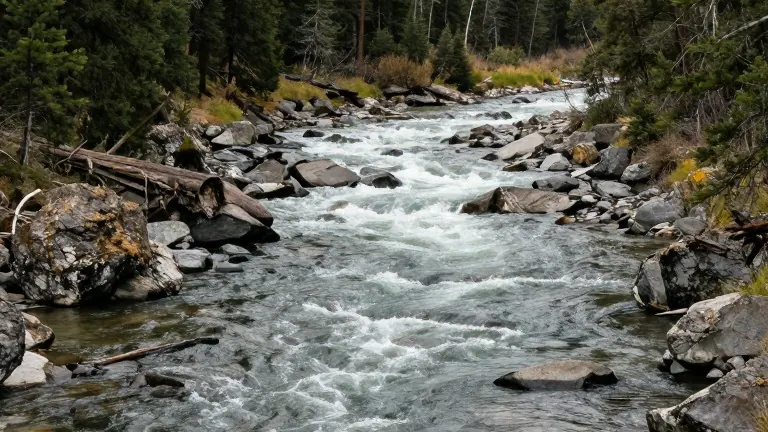
Wyoming will assume the primary role in regulating water quality within Yellowstone National Park under a new agreement announced this week.
Interior Secretary Doug Burgum and Wyoming Governor Mark Gordon unveiled the arrangement, which establishes a framework of concurrent jurisdiction for the nation's first national park. The deal follows several years of regulatory shifts and legal battles over which agency holds authority under the Clean Water Act.
Gordon described the move as a practical acknowledgment of the partnership between the Wyoming Department of Environmental Quality and the National Park Service. Burgum credited President Donald Trump's focus on reducing federal bureaucracy and empowering local decision makers. He stated that Wyoming residents understand their local land and water better than Washington officials do.
The dispute traces back to a shift in federal policy. For more than 50 years, until 2023, the Wyoming Department of Environmental Quality led water quality regulation in the park. In that year, the Biden administration's Environmental Protection Agency designated Yellowstone and 15 other national parks as lands of exclusive federal jurisdiction. This change placed control of sections 401 and 402 of the Clean Water Act, which govern point source pollutants and discharges, with the EPA.
In 2025, the EPA expanded its reach to include surface water quality standards in the park. Three industry groups and affected states, including Wyoming, filed a lawsuit in December 2023 in federal court in Louisiana to block the change. The plaintiffs argued that states had issued 401 certifications for discharges in national parks since Congress granted that authority in 1973.
U.S. District Court Judge James Cain denied the request for an injunction. He ruled that the public interest was best served by allowing the EPA's changes to remain in effect while the case proceeded. The court did not issue a final ruling because the case was suspended in early 2025 to allow the new administration to review the issue.
The Trump administration subsequently finalized regulatory changes to section 401 of the Clean Water Act. Although these rules did not explicitly address national parks with exclusive federal jurisdiction, the new agreement between Burgum and Gordon resolves the issue for Wyoming. The draft agreement was submitted to Congress on October 16 for a 60 day review period.
Jennifer Zygmunt, the water quality division administrator for the Wyoming Department of Environmental Quality, noted that the state agency had never been found deficient in its management of the park's waters. She explained that Wyoming standards often exceed federal requirements. Under state rules, all surface waters in Yellowstone are managed as outstanding resource waters, a classification that was not present in the EPA's framework.
Lindsey Washkoviak of the Wyoming Outdoor Council called the return of authority a good move. She said the state's rules are more clearly defined than federal ones. She expressed concern that the federal takeover created a loophole that could have allowed pollution levels to rise because it was unclear if the EPA would honor the state's pristine water designation.
Cyrus Western, the EPA Region 8 administrator, described the agreement as an example of cooperative federalism. He emphasized that the state has the staff and skills to handle the work. Western stated that Wyoming will act as the permit writer for discharge permits and will conduct all quality checks during the permitting process.