Louisville UPS crash spurs scrutiny of airport safety buffers
A fatal collision in Kentucky is prompting a national review of residential areas located near runways, where federal experts argue current protections are insufficient.
By Fatima Saleh ·
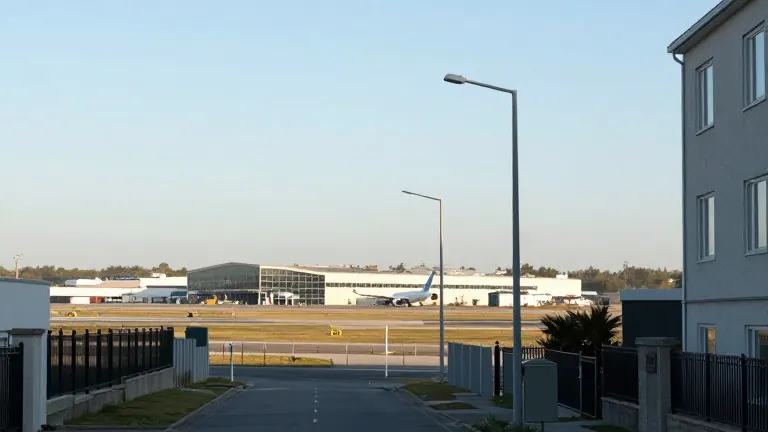
A UPS cargo plane crashed in Louisville, Kentucky, last year shortly after takeoff, killing three crew members and 12 people on the ground in an industrial zone near the runway. The incident has intensified scrutiny of the millions of Americans who live or work in close proximity to airports, a region investigative reporters are now labeling a danger zone.
The Federal Aviation Administration has established minimum distance buffers to mitigate risks during aviation disasters. However, experts contend that these measures are not enough to protect nearby homes and businesses. A national investigative team analyzed federal crash data to map the frequency and locations of these accidents across the United States.
The data reveals numerous instances where aircraft have collided with houses and neighborhood streets. In many of these cases, casualties extended beyond the flight crew to include residents and pedestrians on the ground. The findings challenge the assumption that airport perimeters provide adequate separation between aviation operations and dense communities.
Joce Sterman, a senior national investigative reporter, interviewed advocates pushing for industry-wide changes. Among them is a Florida mayor whose city has experienced a series of close-proximity crashes. Also featured is the mother of a four-year-old boy who died when a plane struck the family's car just feet from an airport runway.
A retired airline pilot and safety advocate weighed in on potential solutions. He suggested that improvements are needed on both sides of the runway fence, addressing infrastructure and operational protocols that currently leave vulnerable populations at risk. The pilot emphasized that proximity to flight paths creates a persistent hazard for local residents.
The investigation also examined other localized safety threats. In southeast Louisiana, investigators spent four years studying carbon monoxide poisonings linked to backup generators used during storms. The new federal report calls for stricter regulations on how close these devices can be placed to residential windows.
In rural areas, a one-person aircraft is being tested to transport a paramedic and life-saving equipment directly to patients. This electric aircraft aims to bypass road networks and reduce response times for medical emergencies. The project is currently being piloted by a woman in Charlotte, North Carolina.
Source: WALA-TV