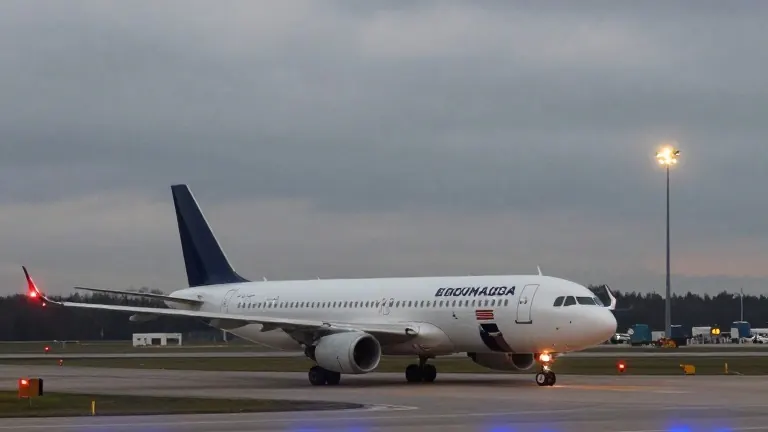
Bomb Threats Hit 14 European Flights and Three Broadcasters
Fighter jets escorted planes in Hungary while police evacuated Irish and Bulgarian TV stations during a new wave of security alerts.
By Samuel Hayes ·
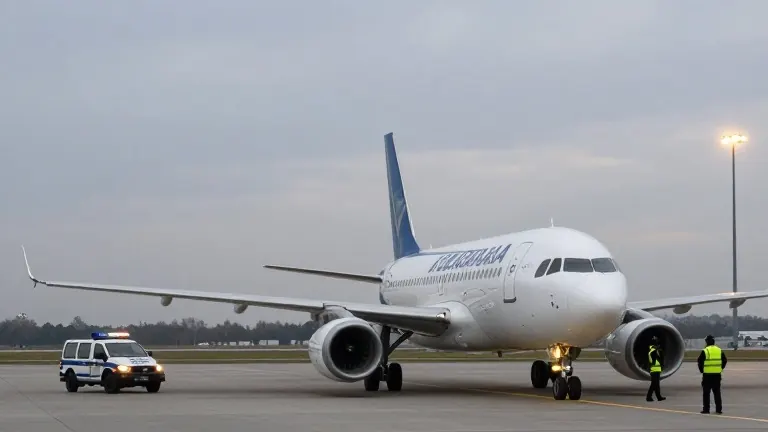
Fighter jets escorted three passenger aircraft through Hungarian airspace on Friday, hours after multiple European flights and broadcasters received fresh bomb threats. The alerts followed a series of hoaxes that disrupted travel earlier this week. Officials confirmed that no suspicious devices were found and no one was injured, but the incidents have raised alarms about the spread of disruptions beyond the sky.
The European Union’s transportation commissioner, Apostolos Tzitzikostas, stated that 11 additional threats were reported on Friday. This follows 14 threats on Thursday and seven on Tuesday. Eurocontrol, the European air traffic authority, noted that the Thursday incidents affected only 0.05% of the nearly 26,300 flights across the European network that day.
In Hungary, defense minister Romulusz Ruszin-Szendi said fighter jets escorted flights from Brussels to Sofia, Prague to Cyprus, and Prague to Romania. Each plane received a threat within an hour of the escort. French Prime Minister Sébastien Lecornu’s office reported four threats against aircraft over France. Those planes landed safely at Paris’ Orly Airport, where bomb disposal experts conducted inspections.
Other affected routes included a Prague-to-Bucharest flight operated by Tarom and a Ryanair flight from Lisbon to Rome. A WizzAir flight from Prague to Rome was diverted to Venice. Passengers evacuated the aircraft after it landed. Eurocontrol said it is monitoring the situation closely with airlines and airports to limit disruption to air traffic flows.
Nine of the affected flights originated from or were destined for Václav Havel Airport in Prague. Airport spokesperson Denisa Hejtmánková confirmed the alerts involved flights to and from Denmark, Spain, Britain, the Netherlands, Cyprus, Italy, and Romania. Czech police said security measures had a minimal impact on normal operations. In Copenhagen, police deployed to the airport for a second consecutive day as a precaution.
Broadcasters joined the list of targets on Friday. The Dublin headquarters of Irish national broadcaster RTE was evacuated. Live broadcasts were replaced with prerecorded programs until police with sniffer dogs cleared the building. Irish Prime Minister Micheál Martin said the incidents show how simple it can be to cause disruption. He announced a major security operation for upcoming European Political Community and EU leader meetings in Dublin.
U.K.-based broadcaster Sky said it received a security threat and is working with authorities. Bulgarian private broadcaster NOVA TV said it received an email claiming the sender was behind the air traffic threats. The network implemented standard safety measures without interrupting broadcasts. Authorities have not attributed the threats to a specific group or state actor. One email reviewed by the Associated Press purported to come from an anti-feminist group targeting a "feminist regime."
Paul Reuter, vice president of the European Cockpit Association, said pilots review procedures and may carry extra fuel in response to such alerts. He called the use of civil aviation for geopolitical disruption "totally unacceptable." Robert Jordan, research director at Britain’s Royal United Services Institute, noted that secure messaging apps allow for greater anonymity. He said airline risk appetite is low because safety procedures are deeply embedded in operations.