European Air Defenses Stalled by U.S. Missile Backlogs
European nations face delays and high costs for American systems like Patriot as production lags behind rising demand.
By Fatima Saleh ·
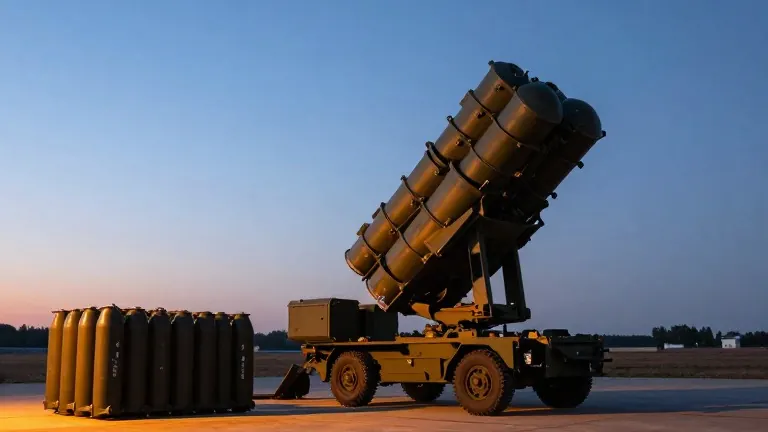
European countries that purchased American air defense systems are facing a growing shortage of missiles. The systems, including Patriot interceptors and fighter jets, are not arriving as quickly as needed. A report from the research institute Bruegel details this supply chain problem. The U.S. military is currently managing its own inventory for operations in Iran. This dual demand has created a major backlog for European buyers. European nations are now locked into these specific American technologies. They cannot easily switch to other suppliers to fill the gap.
The reliance on U.S. hardware began over the past decade. European leaders chose American equipment for several reasons. The technology is widely regarded as high quality. It was readily available when the contracts were signed. Buying American also served a political purpose. It helped keep the United States committed to European security. The assumption was that the supply would remain steady. That assumption is no longer holding up.
Production delays are the primary cause of the shortage. Factories in the United States are not producing missiles fast enough. Demand from European nations continues to rise. The U.S. is also drawing from its stockpile for its own military needs. European nations that bought Patriot systems are particularly affected. They are stuck with American equipment. They must wait for deliveries while paying higher costs. The Bruegel authors note that the strategic gap is now visible.
The report points to a missed opportunity in 2022. At that time, there were calls to fund and order air defense systems from within Europe. Those calls were ignored. Europe chose to buy from the U.S. instead. Now, European nations depend on U.S. production schedules. They have little control over the timeline. The authors argue that a homegrown system would have offered more stability. The current setup leaves European nations at the whim of American contract fulfillment.
The timing of this shortage presents a specific risk. Russia remains a major threat to European security. The U.S. is focused on the conflict in Iran. This split in attention means Europe is waiting for equipment it needs for a different threat. The delays are not just an inconvenience. They affect the readiness of European air forces. Nations are putting up with longer wait times. Costs for these systems are also increasing. The financial and logistical burden is falling on European budgets.
Business journalist Paddy Hirsch commented on the situation. He noted that the current U.S. president has forced the issue of European dependence. Previous presidents had raised concerns about this over-reliance. However, the current administration has made the divergence clear. Hirsch argued that Europe needs to reduce its dependence on the U.S. This is not just about the unpredictability of any single president. It is about the long term. U.S. and European interests may diverge over the next few decades. Europe needs a more independent defense capability.
The Bruegel report highlights the complexity of modern defense procurement. It is not just about buying the best product. It is about securing a reliable supply chain. The U.S. supply chain is currently strained. European nations are feeling the impact directly. They are paying for American technology. They are waiting for American production. The result is a defense posture that is less secure than planned. The report serves as a warning for future procurement decisions. It suggests that local production might be faster and more controllable.
European officials are now dealing with the consequences of these choices. They are negotiating with U.S. suppliers for faster delivery. They are also looking at their own industrial capabilities. The goal is to ensure that air defense systems are operational. The Patriot system is a key part of this network. Its effectiveness depends on having enough missiles in the silos. The current backlog threatens that effectiveness. European nations are working to mitigate the risk. They are balancing political ties with practical military needs.
More News · Greensboro news · Report a business · Got a Story?