NC voters face open Senate seat; 36 governor races hinge on 18-18 split
Voters in Greensboro and across North Carolina cast ballots for an open U.S. Senate seat while 36 states decide their governors in a historically balanced national field.
By Fatima Saleh ·
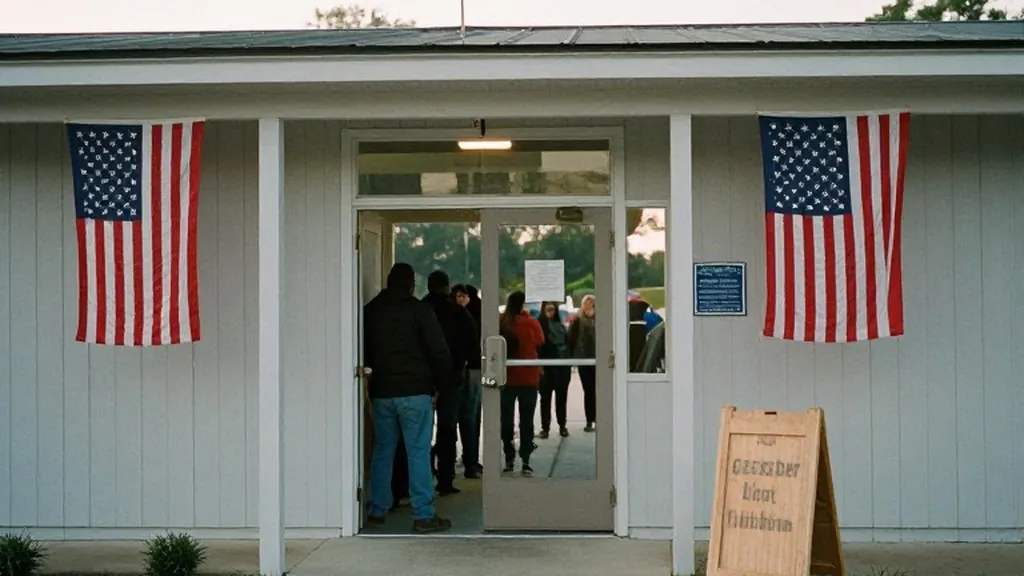
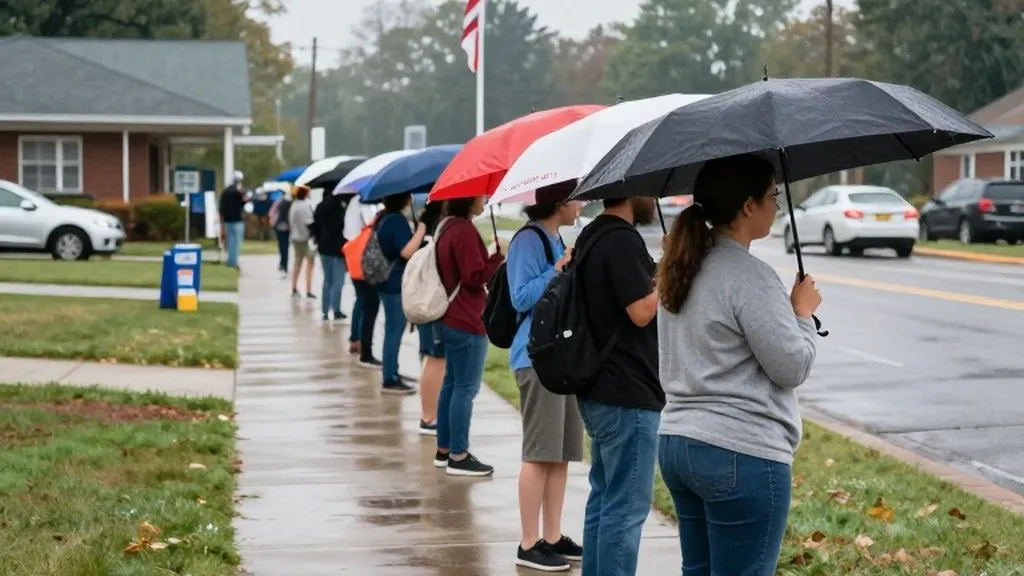
Voters in Greensboro, High Point, and Burlington are heading to the polls on Tuesday, November 3, 2026, with the polls open from 6:30 a.m. to 7:30 p.m. local time. This midterm election, occurring halfway through President Donald Trump's second term, determines who controls Congress for his final two years. In North Carolina, there is no gubernatorial race on the ballot this cycle, but the state has an open U.S. Senate seat because incumbent Thom Tillis is not running for re-election. The Associated Press describes the day as a referendum on the president's performance, with many voters citing high prices and an unpopular war with Iran as key drivers.
The North Carolina Senate race is one of the most closely watched in the country. Democratic former Governor Roy Cooper faces former Republican National Committee chair Michael Whatley. This contest is considered a battleground because the state voted for Trump in 2024 by a margin of 3.3 percent. The Associated Press notes that Tillis retired after clashing with the president, setting the stage for a competitive contest that could influence the balance of power in the upper chamber. All 435 U.S. House seats are also on the ballot in North Carolina, along with state and local offices and ballot measures that vary by county.
Nationally, voters are choosing governors in 36 states. Heading into the election, Republicans hold 26 governor's offices and Democrats hold 24. Among the 36 races on the ballot, the parties are evenly split, with each holding 18 of the seats currently occupied by their respective candidates. This 18 to 18 split creates a high-stakes environment where Democrats only need a net gain of two governorships to achieve a nationwide majority. Republicans have held a majority of governorships since 2010, so a Democratic victory would mark a significant shift in state-level leadership.
The governor's races are complicated by the fact that 19 of the 36 seats are open because the incumbent is not on the ballot. Fifteen governors are term-limited, while three others chose not to run. Iowa's Kim Reynolds, Minnesota's Tim Walz, and Wisconsin's Tony Evers declined to seek another term. Rhode Island's Daniel McKee lost his primary contest. This high number of open seats means that voters in many states are choosing new leaders without a direct comparison to a sitting official. The Associated Press identifies Alaska, Arizona, Georgia, Iowa, Kansas, Michigan, Nevada, Ohio, and Wisconsin as the key battleground states for the governor's office.
In Georgia, Republican health care executive Rick Jackson is challenging Democratic former Atlanta Mayor Keisha Lance Bottoms to succeed Brian Kemp. In Nevada, Republican Governor Joe Lombardo faces Democratic Attorney General Aaron Ford. Ohio presents a unique matchup with Republican Vivek Ramaswamy running against Democrat Amy Acton. The Associated Press reports that Ramaswamy's campaign faced backlash over an ad featuring Acton's estranged mother. Democrats are hoping to hold a majority of governorships for the first time in two decades, a goal that depends heavily on performance in states like Pennsylvania, where Josh Shapiro is defending his seat, and Kansas, which has become a central focus for Senate control.
The mood among voters is defined by economic anxiety. AP-NORC polling indicates that 35 percent of U.S. adults approve of Trump's job performance, while only 25 percent approve of his handling of the economy. About seven in 10 respondents say the country is heading in the wrong direction. More than 57 million people had already voted as of Monday, surpassing the early vote totals from four years ago in many closely watched states. James Moore, a 57-year-old librarian in Raleigh, North Carolina, told the Associated Press that he is paying more taxes, more for health care, and more for everything. His sentiment reflects the broader frustration with the cost of living that is shaping this election.
Republicans are bracing for the possibility of losing the House while fighting to retain the Senate. The Associated Press notes that one or two seats could tip either chamber. Republican National Committee Chairman Joe Gruters stated that everything depends on turnout, asserting that if they turn out their voters, they will win. In contrast, Democratic Congressional Campaign Committee Chair Suzan DelBene said the American people are angry and want change. The results of this election could also impact potential 2028 candidates, including Gavin Newsom, JB Pritzker, and Pete Buttigieg, if Democrats have a strong night.
The 2026 elections are likely to be the most expensive in history. Republican committees outraised and outspent Democratic committees, aided by Trump-affiliated groups and Elon Musk. However, at the candidate level, Democrats outraised their opponents. An analysis by the Associated Press found that 88.1 percent of Republican general election TV ad spending went to states and districts that Trump won in 2024. This spending pattern highlights the strategy of protecting the president's previous victories, even as the political landscape shifts with new congressional maps in states like North Carolina, California, and Florida.
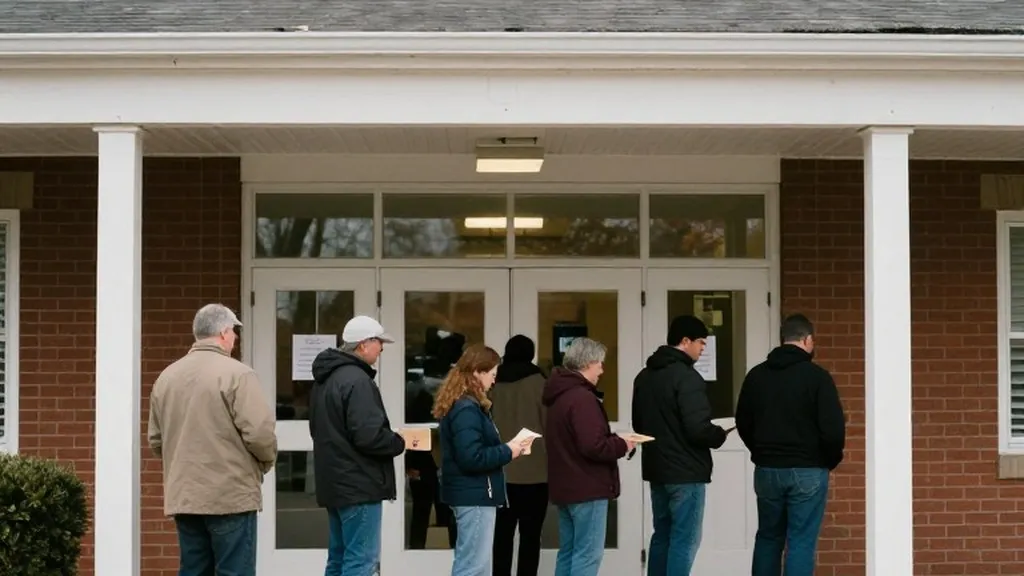
Voters in North Carolina can find their polling place at vote.gov or through their state election office. Anyone in line when polls close at 7:30 p.m. is entitled to vote. ID rules vary by state, so voters are advised to check their specific requirements before going to the polls. The U.S. Postal Service has added hours, staff, and special lines to ensure mail ballots are counted on time. In North Carolina, voters are also deciding on three statewide ballot measures, including amendments regarding property tax levy limits, income tax rate caps, and voter identification requirements. These local decisions will shape the state's fiscal and administrative framework for the coming years.