FCC clears SpaceX for million satellites
Regulators approved the 'Starmind' constellation, prompting criticism from astronomers and scientists over cost and night-sky visibility.
By Samuel Hayes ·
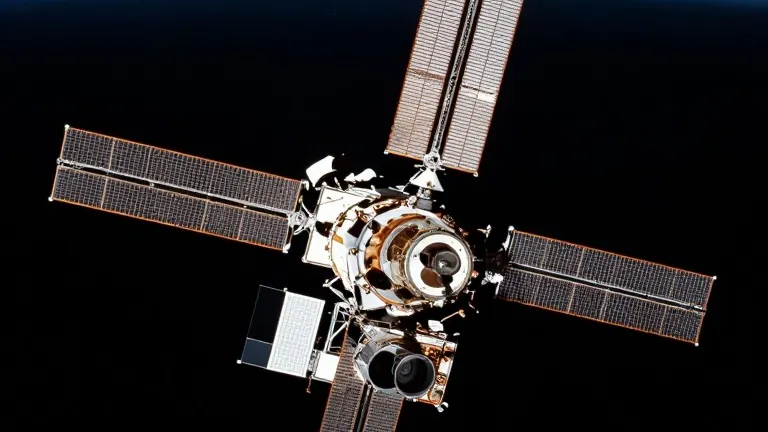
The Federal Communications Commission approved SpaceX's plan to launch one million satellites on Wednesday. The project, named Starmind, would create a network of orbital compute modules intended to process data for use on Earth.
FCC Chairman Brendan Carr called the decision a historic first in the artificial intelligence race. Carr, who was appointed by President Donald Trump, stated that the move opens a bold new frontier. He said America is leading the world into the era of super intelligence through this deployment.
The authorization order sets specific deadlines for Elon Musk's company. SpaceX must deploy at least one authorized space station by 2033. The company will then gradually add more modules through 2040. Musk welcomed the decision on social media, having long vowed to build solar-powered data centers in space to run AI tools.
Scientists have questioned the feasibility of the plan. Adam Becker, an astrophysicist and author, described the prospect of launching a million satellites as a fantasy. He stated that it is not going to happen, citing enormous technical and financial obstacles. Becker pointed out that space is a vacuum, which traps heat inside objects like a thermos. This creates basic physical limits on how much heat can be radiated away.
Proponents argue that using solar energy in space would ease pressure on power grids. It could also reduce the need for large computing warehouses on Earth and the water required to cool them. However, Becker and other experts warn of environmental risks, including atmospheric pollution from launches and reentries. They also fear in-orbit collisions could create a cascading set of space junk in low Earth orbit.
The FCC acknowledged receiving a substantial number of public comments, including petitions to deny the request. The agency maintained that deploying the satellites serves the public interest. It dismissed environmental concerns, noting they fall outside its regulatory authority. The FCC said the proposal operates consistently with its existing orbital debris rules.
The American Astronomical Society, Viasat, and Amazon-owned Kuiper Systems urged the regulator to reject the plan. The AAS said it was disheartened and dismayed by the decision. It warned that the larger and brighter satellites would undermine decades of federal investment in astronomical facilities. The group said the constellation would be visible as extremely bright objects in the night sky for longer periods.
More Business · Greensboro news · Scam Watch · Report a business · Got a Story?