Alamance County voters decide Senate race and state measures
With polls closed at 7:30 p.m. in Greensboro, High Point, and Burlington, residents cast ballots for an open U.S. Senate seat, state legislative offices, and constitutional amendments on taxes and voter identification.
By Lauren Foster ·
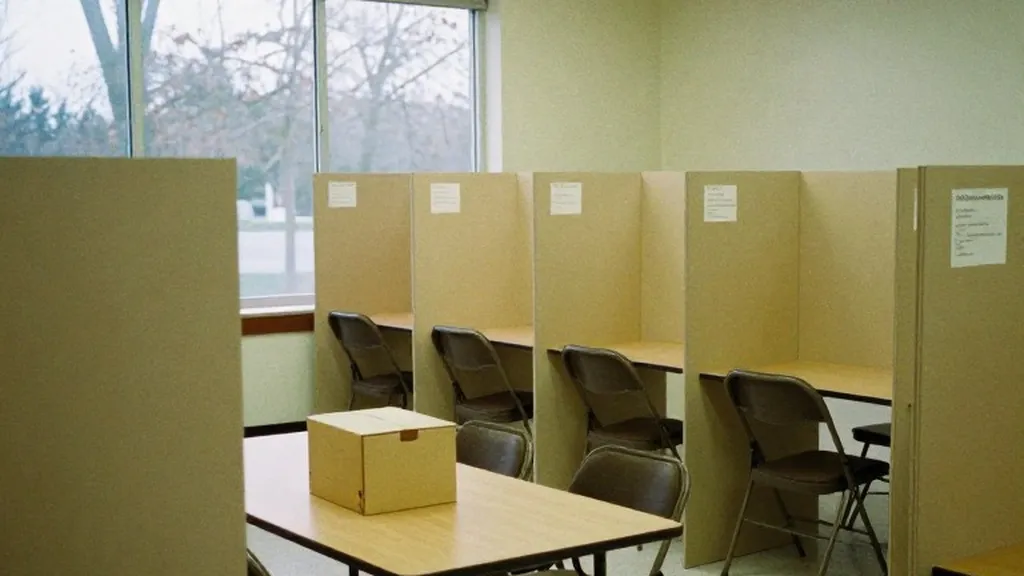
Polls in Alamance County opened at 6:30 a.m. and closed at 7:30 p.m. on Tuesday, November 3, 2026. Residents in Greensboro, High Point, and Burlington participated in a general election that featured a wide range of federal, state, and local contests. Voters could locate their specific polling places through the official vote.gov resource, a standard practice across North Carolina. The election day marked the final step in a cycle that included a primary on March 3 and a runoff on May 12. The turnout in the county contributed to the statewide effort to elect officials for the next two years.
The most prominent federal contest in North Carolina was for the open U.S. Senate seat, as no incumbent was running. Candidates from the Democratic, Green, Libertarian, and Republican parties were on the ballot. This race was part of a broader national trend where Democrats secured majorities in both the U.S. House and the U.S. Senate. Nationwide, Democrats picked up at least 43 House seats and seven Senate seats, all of which were previously held by Republicans. This shift in power means that the party of President Donald Trump, who is serving his final two years in office, faces a new dynamic in Congress.
In the U.S. House of Representatives, Democrats achieved a majority of at least 250 seats against 157 for Republicans. This result reflects a net loss of at least 42 seats for the Republican Party in the lower chamber. While this loss is significant, it falls short of the 48 seat loss required to qualify as a wave election by certain historical standards. However, the Senate loss of at least seven seats for Republicans places this midterm cycle in the top 20 percent of election years in terms of seat swings against the party of the sitting president. These results have immediate implications for legislative control and oversight activities in Washington.
Statewide, North Carolina voters also decided on several constitutional amendments. One proposal, known as the Property Tax Levy Limit Amendment, would require the state legislature to pass laws limiting the amount that property taxes may increase. Another measure, the Reduce Income Tax Rate Cap Amendment, sought to lower the maximum allowable income tax rate from 7 percent to 3.5 percent. A third amendment, the Require Voter Identification Amendment, aimed to mandate photographic identification for all voters, not just those voting in person. These measures were part of a slate of statewide ballot items that varied in their potential impact on state fiscal policy and election administration.
Beyond the federal and statewide races, every U.S. House seat in North Carolina was on the ballot. Voters also elected members to the State Senate and the State House, ensuring representation in the state legislature. The election included contests for the State Supreme Court and intermediate appellate courts, allowing residents to influence the judicial branch of state government. Local elections for school boards and municipal government offices were also held, providing a direct voice in community leadership and educational policy. The variety of offices on the ballot meant that a single trip to the polls in Greensboro, High Point, or Burlington addressed multiple levels of government.
The national picture showed a significant shift in control of state governments as well. Democrats won a plurality of state government trifectas and state legislative chambers. They also secured a majority of governorships for the first time since before the 2010 elections. In 44 of the 46 states where trifecta offices were on the ballot, 20 states became Democratic trifectas, while 16 remained or became Republican trifectas. Eight states ended with divided governments. This broad-based Democratic victory indicates a strong mandate for the party across various levels of political authority, from the executive branch to the legislative bodies in state capitols.
Leadership transitions in Congress are already underway in response to these results. In the U.S. House, Republicans elected Rep. Jim Jordan of Ohio as their minority leader. Jordan, 62, defeated Rep. Steve Scalise of Louisiana in a secret ballot vote that ended 106 to 73. Jordan, a co-founder of the House Freedom Caucus, emphasized his experience in oversight and committee hearings. He stated that the party's job is to be on offense rather than defense, a strategy aimed at countering the new Democratic majority. Scalise, 61, had previously served as party whip and majority leader, bringing a wealth of legislative experience to the race.
In the U.S. Senate, Republicans are deciding whether to retain Sen. John Thune of South Dakota as their leader. Thune is expected to be reelected as he remains popular with his colleagues and is running unopposed. However, some senators have called for a delay in the leadership elections to allow for a robust conversation about the party's future. Sen. Ron Johnson of Wisconsin argued that the defeat demands change and that business as usual is no longer sufficient. Despite these calls, the leadership elections proceeded, with Thune maintaining widespread support among his peers. The Senate will now operate with a 54 to 44 Democratic majority, a significant change from the previous balance of power.
The election results have also highlighted the role of ballot measures in shaping state policy. In North Carolina, the constitutional amendments on taxes and voter identification represent key opportunities for voters to directly influence state law. The Property Tax Levy Limit Amendment and the Income Tax Rate Cap Amendment both address fiscal concerns that are central to many voters' decision-making processes. The Voter Identification Amendment touches on the mechanics of voting itself, a topic that has drawn national attention. These measures, alongside the elections for state and local offices, complete a comprehensive update of the state's political landscape.