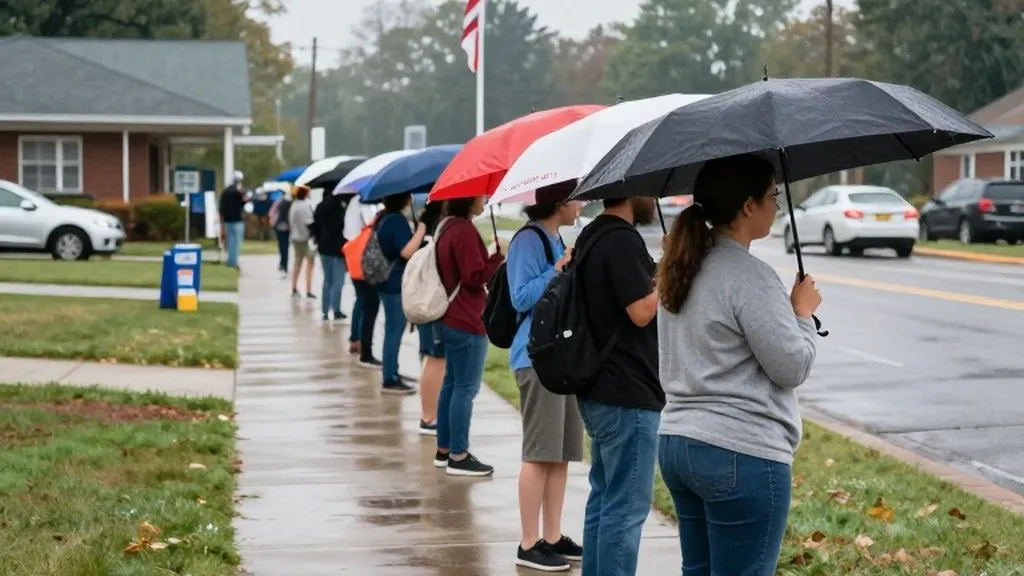
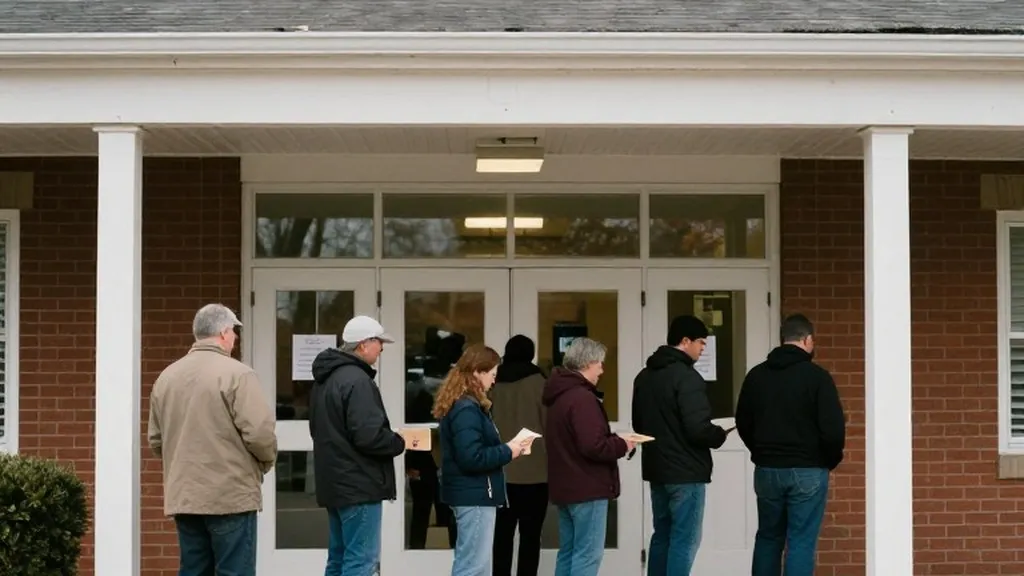
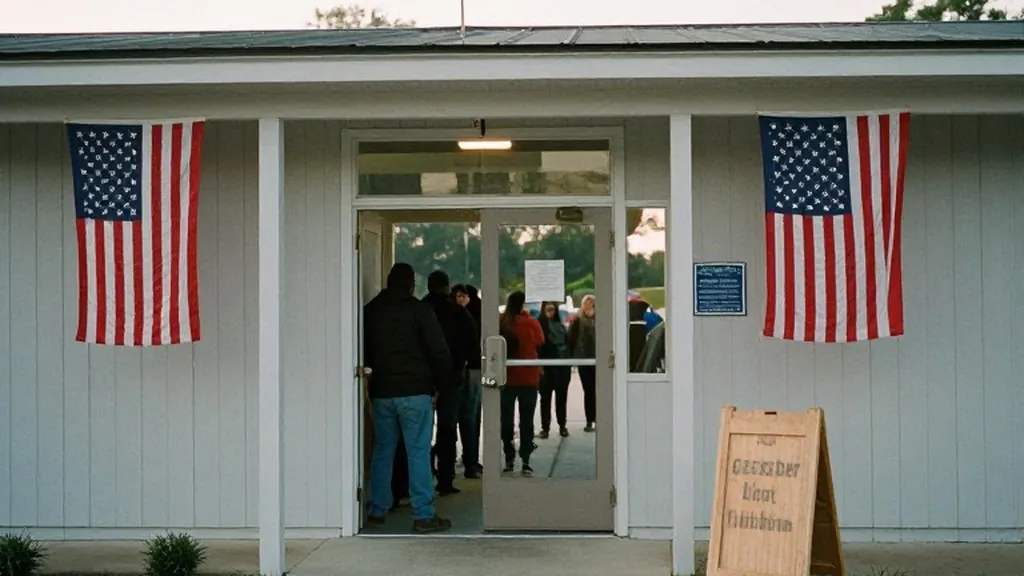
Voting ends in North Carolina as national races head to the polls
Democrats favorably positioned to flip North Carolina's Senate seat, while House control hinges on Republican turnout in key red states.
By Samuel Hayes ·
Voting officially ended on November 3, 2026, concluding the midterm election cycle. More than 59 million Americans had already cast ballots by that point, a figure representing nearly half of the total votes recorded in the previous midterm election. The final results will determine which party controls the U.S. House of Representatives and whether Democrats can secure a majority in the U.S. Senate.
Democrats entered Election Day with a double-digit advantage in early voting data. To take control of the House, they needed to flip three seats from the Republicans. Analysts indicated that the political environment had shifted in favor of Democrats over the preceding month. Republicans attempted to protect their majority through mid-decade redistricting, but experts suggested this strategy might not be sufficient to retain the chamber.
The race for the Senate proved more uncertain. Democrats required four seat flips to gain control, a threshold that seemed unlikely at the start of the cycle but became a possibility due to strong Democratic recruiting and a challenging national climate for Republicans. North Carolina emerged as the primary target for a Democratic pickup. Beyond that single seat, most remaining races were considered toss-ups or slight favorites for the Republicans.
The remaining competitive Senate seats were held by Republicans in states that Donald Trump won by double-digit margins in the 2024 election. Michigan stood out as the top target for Republican efforts to maintain their Senate presence. If Republicans held Michigan, it would alter the calculation for Democrats seeking a majority. Conversely, if Republicans lost multiple seats, Democrats could claim control of the chamber.
Turnout among Republican voters served as a critical variable for the final outcome. High turnout could limit Democratic gains to a single seat. Lower turnout, however, could result in a loss of up to six or seven seats for the Republicans, handing Democrats the Senate. Trump campaigned in numerous red states ahead of Election Day to mobilize his base and influence these numbers.
Vote counting began at 6 p.m. Eastern Time in Kentucky and Indiana. Results from other states followed as polls closed across the nation. Officials warned that determining winners in several close races would require patience, as vote counts could take days or even weeks to finalize. Ballots continued to be processed as of the morning of November 3.
Source: WFDD Public Radio · original report published
More Politics · Greensboro news · Report a business · Got a Story?