New report urges North Carolina to streamline rules for coastal industry growth
RTI International and NC EcoTech recommend new technologies and a statewide plan to connect the state's fragmented coastal businesses.
By Lauren Foster ·
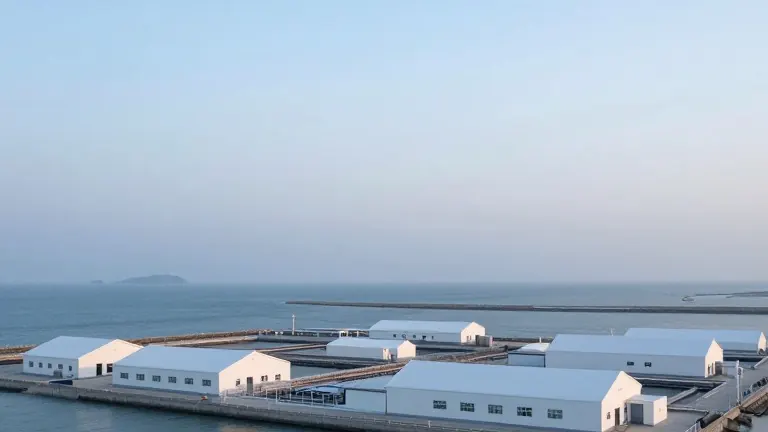
Researchers from RTI International and NC EcoTech have released a study calling for a coordinated statewide strategy to grow North Carolina's coastal industries. The report argues that the state's current maritime sectors operate in silos and recommends specific regulatory changes to help businesses test new ideas.
The study defines the blue economy as all economic activity tied to oceans, coasts, and marine ecosystems. This includes commercial fishing, aquaculture, boat building, shipping, and coastal resilience projects. While tourism remains a major driver of coastal revenue, the report focuses on connecting these diverse assets to create a more unified economic system.
Jessica Wilkinson, an economic development researcher at RTI, noted that North Carolina has a deep heritage in maritime activities. However, she observed that these sectors are often disconnected from one another. Tourism can sometimes conflict with aquaculture interests, and the state's long history of fin fish farming is not always leveraged effectively.
Adams Bailey, a research economist who contributed to the report, emphasized the state's geographic advantage. He highlighted that North Carolina possesses a unique length of coastline that requires protection from erosion. Maintaining these habitats through resilient construction supports environmental sustainability and benefits the local economy.
The report recommends that current and future farmers and fishermen adopt emerging technologies to boost production. Key technologies identified include artificial intelligence, remote sensing, and recirculating aquaculture systems. These systems allow fish to be farmed in controlled environments, reducing waste and improving efficiency.
Bailey pointed to Hima Seafood in Norway as a model for potential growth. The company uses recirculating aquaculture systems to farm fish and is currently considering an investment in North Carolina. If Hima selects the state for its operations, Bailey said it would create jobs and add value to the local economy by producing seafood grown locally.
The NC EcoTech project that commissioned this work ended about a year ago. The research was partly funded by the National Science Foundation, but changes in federal funding have caused some time-limited efforts to conclude. Wilkinson described the report as a call to action for new stakeholders to step in and support these initiatives.
The researchers also identified the regulatory environment as a barrier to progress. Many stakeholders told the team that current rules are applied on a case-by-case basis, creating bottlenecks that slow down the implementation of new technologies. The report urges policymakers to clarify these processes to help coastal businesses move forward.
More Business · Greensboro news · Scam Watch · Report a business · Got a Story?