Libertarian Candidate Tom Bailey May Decide Close House Race
With margins expected to be razor-thin in North Carolina's 1st Congressional District, observers point to a third-party contender who outpolled the 2024 margin of victory.
By Samuel Hayes ·
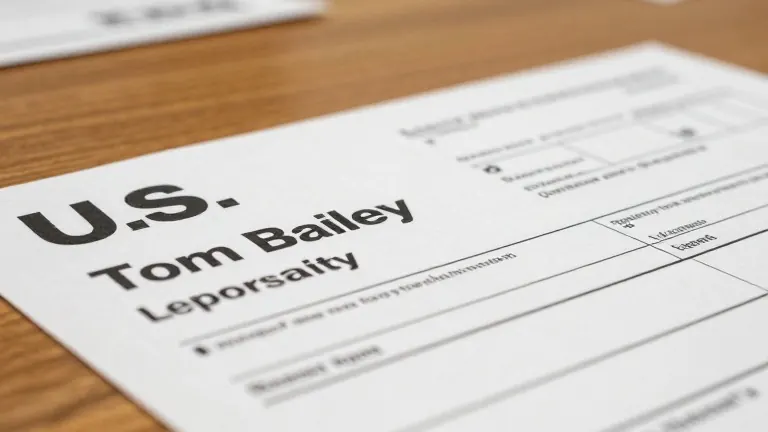
Libertarian candidate Tom Bailey has become a focal point in North Carolina's 1st Congressional District, where the gap between major party candidates is expected to be narrow enough that his vote total could determine the winner. Bailey, a Vietnam War veteran residing in Guilford County, is running for the second consecutive cycle against incumbent Democrat Don Davis and Republican challenger Laurie Buckhout.
The 2024 election results provide the clearest evidence of Bailey's potential impact. In that contest, Davis defeated Buckhout by a margin of approximately 6,300 votes. Bailey received nearly 10,000 votes, a total that exceeded the difference between the two major party contenders. Chris Cooper, director of the Haire Institute for Public Policy at Western Carolina University, stated that Bailey could have decided the outcome of that race. Cooper noted that while a vote for Bailey does not automatically transfer to Buckhout, Libertarian voters often lean conservative, particularly on economic issues.
Bailey has used social media to criticize the U.S. military's involvement in the ongoing conflict with Iran and to denounce the growing national debt. In a Facebook message, he wrote, "The corporate sponsored Dems and (Republicans) are partners in a scam to create the illusion of choice while offering none." He has also criticized immigration enforcement methods under the Trump administration, including the deaths of two American citizens in Minneapolis. Bailey argues that his candidacy does not primarily siphon votes from one major party, noting that many potential voters currently abstain from casting ballots.
Republican strategists in the district are weighing the impact of Bailey's presence. Mary Helen Pelt Warren, chairwoman of the First District Republican Party, labeled Bailey a "spoiler candidate." She pointed out that he lives several hours away from the district he seeks to represent and questioned his intent to serve. "Not all Americans vote, but I do think they would be upset that somebody was trying to pose as a realistic candidate when they're not," Pelt Warren said. The Buckhout campaign echoed this sentiment in an email from spokesman Stephen Gallagher, asserting that a vote for the third-party candidate is effectively a vote for Speaker Hakeem Jeffries.
A dark money group called the American Forge Coalition has run advertisements touting Bailey's candidacy, a tactic the group has used in other states to attack Republican candidates from the right. Davis responded to questions about Bailey by stating that third-party candidates deserve to be heard. He added, "My focus has been, regardless of political party, to show up, listen, and work for those you are elected to represent." Cooper suggested that in a closely contested election, the small number of voters persuaded by the Libertarian label could be the critical factor in deciding which party controls the U.S. House of Representatives.
Bailey did not respond to an interview request regarding his potential influence on the race's outcome. The district was redrawn last year to favor Republican candidates, yet it remains one of the most competitive seats in the country. As the election approaches, the attention to Bailey reflects a strategic calculation by both major parties that the final margin of victory may hinge on voters who identify with neither Democrat nor Republican platforms.
Source: WFDD Public Radio · original report published
More Politics · Greensboro news · Report a business · Got a Story?