Navajo Lake fills rapidly, nearing spillway limit
Water levels at the New Mexico reservoir have climbed 61 feet since mid-September, reaching their highest point this late in the year since the dam opened.
By Samuel Hayes ·
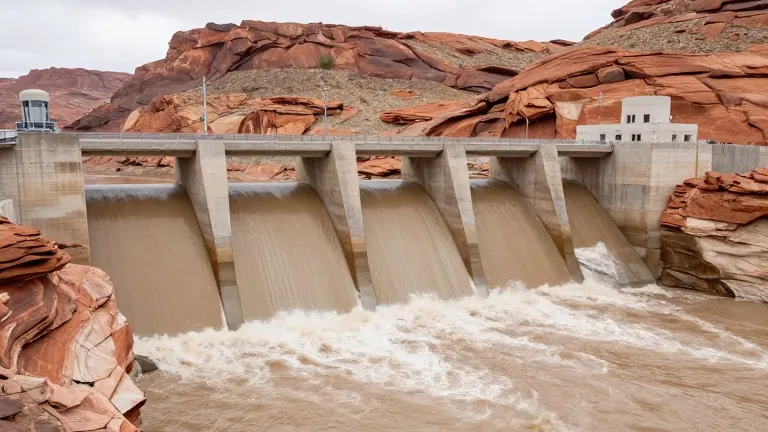
Navajo Lake in New Mexico is now just 14 feet below the top of its spillway.
The reservoir has gained more than 61 feet of water since September 14. This surge follows weeks of heavy rainfall and flooding across the Four Corners region. In early October, the lake had dropped to its lowest level since 2004. The change has been rapid and dramatic. Jarrett Johnson, president of the Navajo Lake Marina, stated that the water level rose over 24 feet in the last two weeks alone.
Johnson reported that the lake has received more than 200 billion gallons of water. Levels continue to climb at a rate of four to five inches per day. He noted that this is the highest water level recorded this late in the year since the dam was built in 1962. While the reservoir is close to capacity, Johnson said there is no immediate threat of the water cresting over the spillway.
The dam operators are currently managing the outflow into the San Juan River. During the recent flooding, releases were held at approximately 250 cubic feet per second. The river downstream had already suffered damage and was rerouted in several locations. Johnson said it is encouraging to see water return to the spillway after a long absence.
Long-time visitor John-Olav Johnsen expressed concern about the upcoming winter. He warned that a heavy snowpack followed by an early melt could repeat the current flooding conditions, potentially making them worse. Johnson added that the higher water levels are setting up the marina well for the 2027 season. He expects the water to clear in the spring, which would allow boaters to access areas of the lake not seen in years.
The marina is preparing for a busy year as a result of the water turnaround. Crews are still completing cleanup operations. The current level of the reservoir is the primary factor influencing these preparations. No further releases are scheduled to change the current flow rate in the immediate term.