Devereaux’s new book chronicles Yellowstone wolf reintroduction and subsequent hunting season
The narrative details the 1995 return of wolves to the park and the 2020 winter when approximately 20 percent of the population was trapped or shot.
By Fatima Saleh ·
Ryan Devereaux’s new book, “The Hunt: A True Story of Resurrection and Retribution in the West,” examines the period following the reintroduction of wolves to Yellowstone National Park. The 2020 winter, which marked the 25th anniversary of the animals' return, saw roughly one-fifth of the park's wolf population trapped or shot.
The text begins on January 12, 1995, when eight wolves from the Canadian Rockies arrived in Gardiner, Montana. The animals traveled in aluminum containers inside horse trailers, accompanied by a column of law enforcement vehicles on US Route 89. The group passed under the Roosevelt Arch, the primary northern entrance to the park, at 8:35 a.m.
Hundreds of locals, including schoolchildren waving American flags, lined the streets in Gardiner. The unincorporated community had not seen a comparable event since the arrival of the railroad. The wolves were bound for the Lamar Valley, a grassland ecosystem within the 2.2-million-acre reserve that spans northwest Wyoming, southwest Montana, and eastern Idaho.
Doug Smith, the 34-year-old head biologist for the government's environmental reparations experiment, waited at park headquarters while the procession moved toward the Lamar. The reintroduction proposal had received more than 160,000 written public comments, the highest number for any environmental policy decision in history. Of those, 100,000 supported the plan, though opposition in Montana, Wyoming, and Idaho remained intense.
Protests occurred across the West, with demonstrators in Helena holding a sign that read, “The Wolf Is the Saddam Hussein of the Animal World.” A former Republican congressional staffer at a hearing in Cody, Wyoming, described the reintroduction as a war on Western culture. The federal government had held hundreds of meetings in the region as the project approached its deadline.
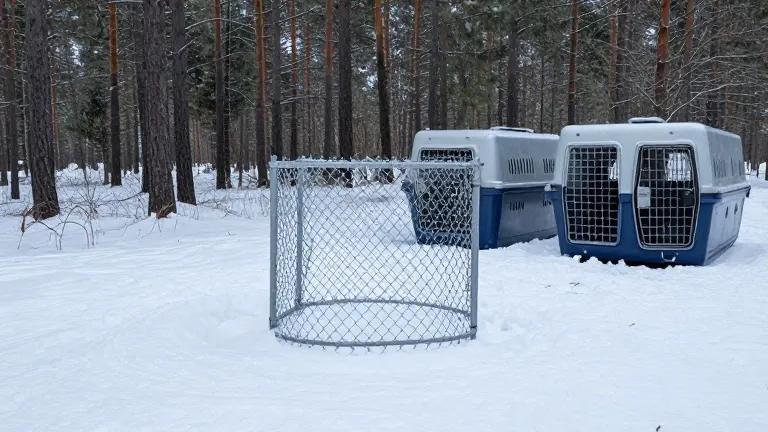
The wolves were scheduled to be released into acclimation pens at the lower Lamar, Rose Creek, and Soda Butte. Armed rangers were positioned in hunting blinds to guard the sites. The plan involved unloading three wolves into containers and hauling them to the first pen on mule-drawn sleighs.
Upon reaching a clearing half a mile from the road, Interior Secretary Bruce Babbitt and US Fish and Wildlife Service director Mollie Beattie hand-carried the first container into the chain-link pen. The wolves remained locked inside the kennels, which were dropped in the snow. This pause occurred because a federal court panel required 48 hours to consider an emergency motion filed by opponents seeking to halt the project.
Babbitt told assembled reporters that the reintroduction was an extraordinary achievement. He warned that if the court did not order the wolves' release quickly, the cages would become coffins. The wolves' sedatives had worn off, and they were awake inside the containers while the government officials fielded press questions.
The reintroduction was the culmination of decades of scientific advocacy and the passage of the Endangered Species Act in the 1970s. Before the wolves' return, the park's elk population had grown to approximately 19,000 animals, leading to starvation and strain on the local ecosystem. The return of the predator was intended to restore balance to the Lamar Valley.
Devereaux’s account connects the 1995 arrival to the 2020 hunting season. The book explores the dynamics of retribution and resurrection in the American West, detailing how the initial controversy and the subsequent management of the wolf population shaped the region's history.
More News · Greensboro news · Report a business · Got a Story?