Fairfax County lowers lot size for accessory dwelling units
The Planning Commission rejected calls to require owner occupancy and additional parking, aiming to close a housing gap of 400,000 units.
By Lauren Foster ·
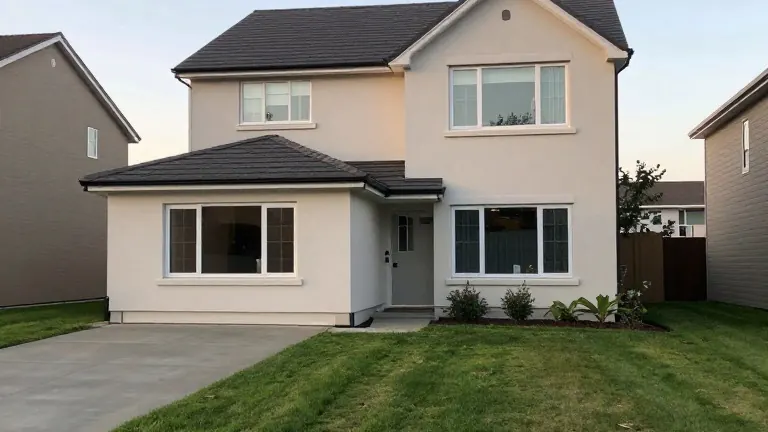
Fairfax County estimates a housing shortfall of 400,000 units, a deficit the Planning Commission moved to address on Nov. 4 by approving amendments to the Zoning Ordinance for accessory living units, or ALUs. The vote followed a recommendation from county planning staff to streamline requirements and increase housing supply. The commission made several alterations to the initial proposal, balancing the goal of expansion against concerns raised by community representatives during a public hearing the previous week.
The approved motion permits detached ALUs on lots of at least 15,000 square feet by right. The existing zoning code limits this to lots of two acres, or 87,120 square feet. Under the new rules, ALUs on lots smaller than 15,000 square feet may still be approved through a special permit. The commission retained the current provision requiring property owners to live in either the principal dwelling or the ALU. This decision came after several community association representatives argued that eliminating the owner-occupancy rule would attract off-site landlords who might neglect property maintenance or tolerate problem tenants.
The vote also raised the occupancy cap for ALUs. Current rules limit residents to two people, while planning staff proposed a maximum of three. The commission allowed up to four people in an ALU. Commission member Candace Bennett, who represents the at-large district, approved the motion that combined these changes. Several other amendments failed to gain support, including a proposal to allow ALUs in townhouses if a special permit is approved by the Board of Zoning Appeals. Jeremy Hancock, representing the Providence district, argued that townhomes should be eligible because they already house multiple tenants, but owners cannot currently install kitchens to create interior units.
Commission Chair Phillip Niedzielski-Eichner and member Alis Wang of the Mason district opposed including townhomes in the current amendment but suggested revisiting the idea in the future. Niedzielski-Eichner also proposed retaining the requirement for an additional parking space, citing the need for space in denser neighborhoods if ALU occupancy expands. That motion did not pass. Another rejected motion sought to retain administrative permit requirements for all ALUs with a five-year renewal process. Alyssa Batchelor-Causey of the Dranesville district supported that measure, noting it would help residents track ALUs in their neighborhoods, a concern raised during the hearing.
Niedzielski-Eichner stated his opposition to administrative permits because he viewed them as contrary to the goals of streamlining the approval process and addressing the need for affordable housing. Following the passage of the main motion, the commission approved two follow-on measures. One requires a report on ALU data to be submitted in 2028. The other calls for the development of educational materials for homeowners regarding the requirements and responsibilities of establishing an ALU.