Boom Supersonic delays Overture to 2030 as factory pivots to AI power
United Airlines CEO Scott Kirby says the 2029 launch is off, while the firm builds Colorado turbines for data centers.
By Fatima Saleh ·
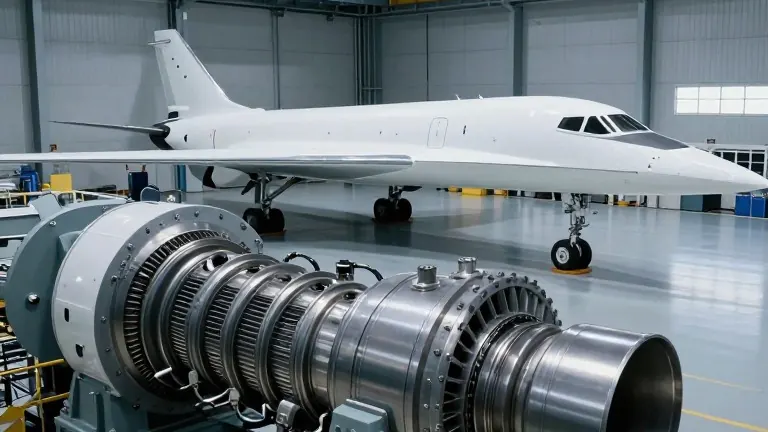
United Airlines CEO Scott Kirby told a podcast on October 28 that the first Overture supersonic jet will not reach passengers until after 2029. The airline executive said the official timeline is slipping, a direct challenge to the schedule set by Boom Supersonic. Kirby’s comments mark the latest public signal that the company’s flagship aircraft may be delayed.
Boom Supersonic CEO Blake Scholl announced a new factory in Colorado. The facility will manufacture gas turbines designed to power artificial intelligence data centers. Scholl described the move as a renaissance in energy and flight. The company aims to use turbine technology to support the growing infrastructure of AI while it finalizes its aircraft.
The pivot to energy production follows years of development work. In 2024 and 2025, Boom flew its XB-1 demonstrator. The aircraft tested a boomless cruise concept. This technology relies on specific atmospheric conditions to bend shockwaves upward. The goal is to allow supersonic speeds over land without loud sonic booms disturbing residents on the ground.
Regulatory changes in Washington have cleared the path for commercial operations. In June 2026, the Federal Aviation Administration proposed a new rule. The proposal overturns a long-standing ban on supersonic flights over the United States. This change followed an executive order signed by President Donald Trump. The new rule would allow airlines to operate faster than the speed of sound over domestic airspace.
Boom has signed conditional agreements with American Airlines, Japan Airlines, and United Airlines. These deals involve non-refundable deposits. The amounts of these deposits have not been disclosed. The agreements allow the airlines to purchase Overture aircraft once the plane becomes commercially available. Early backers have also questioned the company's delivery timeline, with some exiting their support entirely.
Source: Ars Technica
More Business · Scam Watch · Report a business · Got a Story?