Wildfire smoke exposure in schools rises eightfold, OSU researchers report
Data from 2006 to 2023 shows the average number of annual smoke days at public schools jumped from 6.8 to 54.4, prompting calls for better filtration systems.
By Samuel Hayes ·
Wildfire seasons are growing longer and more intense across the United States, exposing students to increasingly poor air quality. A new study from Oregon State University indicates that schools require improved air filtration systems to protect children from the rising levels of smoke.
Researchers analyzed national air quality data spanning 2006 to 2023. The analysis revealed that the average number of annual smoke days at public schools increased from 6.8 to 54.4 days over that 17-year period. This represents a nearly eightfold increase in the duration of unhealthy air exposure for students.
Childcare centers experienced a similar trajectory. The average number of smoke days at these facilities rose from 9.4 to 112.2 days. Molly Kile, an environmental epidemiologist at Oregon State and a lead researcher on the study, stated that children are collectively experiencing billions of days of smoky air each year.
The study, published in Environmental Research earlier this month, notes that while the number of annual U.S. wildfires has remained stable at approximately 70,000, the intensity of those fires is increasing. In Oregon, wildfires scorched 2.5 million acres this summer, breaking the previous record of 1.9 million acres set in 2024, according to the Oregon Department of Forestry.
Kile explained that fine particulate matter, specifically PM2.5, travels hundreds to thousands of miles on prevailing west to east winds. These particles can be inhaled deeply into the lungs and enter the bloodstream. Wildfires currently account for almost half of all PM2.5 across the country, a factor known to cause cardiovascular disease and worsen respiratory illness.
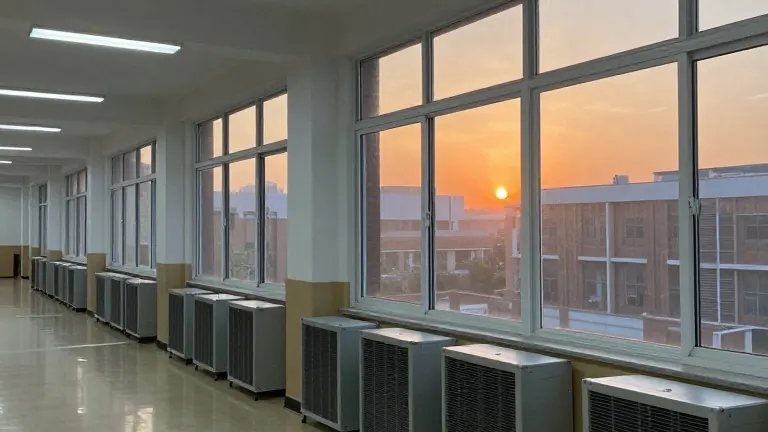
The research found that staying indoors does not always guarantee safety. Kile reported that some schools had higher indoor PM2.5 concentrations than nearby outdoor measurements during smoke events. She emphasized that HVAC upgrades or portable HEPA filters are necessary to address this issue. HEPA filters offer a more affordable approach compared to the cost of upgrading HVAC systems.
Stephanie Foster, a program manager at Samaritan Health Services and the study's corresponding author, noted that educational facilities are ideal locations for coordinated preparedness plans. She said that implementing air filtration, indoor air quality monitoring, and activity changes during smoke events can reduce exposure for the children who spend significant time in these buildings.