Pectoral Sandpipers Face Growing Odds in Warming Arctic
Nearly half of the 41 shorebird species breeding in Alaska are in decline as shifting weather patterns disrupt their critical feeding schedules.
By Lauren Foster ·
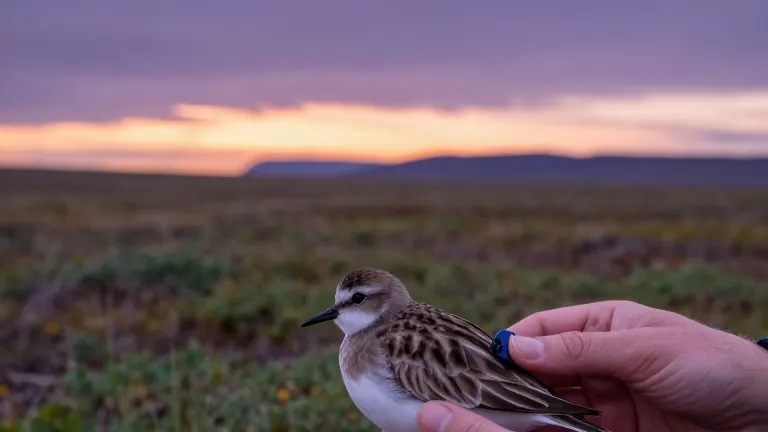
Nearly half of the 41 shorebird species that breed in Alaska are now in decline, according to 24 years of data collected by researchers.
These birds, including the pectoral sandpiper, undertake annual migrations exceeding 17,000 miles between Alaska and Argentina. They are roughly the size of a robin and weigh about three ounces, yet they flap their wings for the entire journey rather than soaring on wind currents.
The decline is linked to a mismatch between the birds' arrival times and the availability of their food source. As the Arctic warms, spring arrives earlier, causing insects to emerge sooner. This leaves shorebird chicks hatching after the peak insect population has passed, reducing their survival rates.
In Utqiaġvik, the northernmost city in the United States, scientists track these birds to understand the changes. Wildlife biologist Rick Lanctot of the U.S. Fish and Wildlife Service has spent two decades studying these species. He notes that newly arrived birds are often so thin that their breastbones are prominent, indicating they have used nearly all their energy reserves during the flight.
Researchers attach tiny GPS tags to the birds, some weighing as little as a grain of rice, to log locations every 15 minutes. This technology has revealed that some species, like the bar-tailed godwit, can fly more than 8,000 miles without stopping. These findings have reshaped scientific understanding of how small birds navigate long distances.
Local Inupiat people have observed the change for decades. Robin Mongoyak, a wildlife guide, says the birds have been central to community life and culture. He recalls when sea ice lasted for multiple years, a condition that is now rare. He notes that temperatures in the Arctic have risen four times faster than the global average, and he sees fewer birds than he did 35 years ago.
Graduate student Julia Berliner and assistant professor Amanda Koltz from the University of Texas at Austin are collecting insect samples to measure nutritional quality. They are examining whether the specific types of insects available, such as spiders versus beetles, provide the necessary nutrients for egg production. If the timing of these insects shifts, the nutritional menu for the birds changes, further complicating their ability to raise young.
Conservation efforts are expanding to protect the wetlands and grasslands these birds use as rest stops. In some areas, farmers are compensated to keep agricultural fields flooded longer to provide habitat. However, habitat loss from development and drought continues to threaten the predictability of these stopover sites, making adaptation more difficult for the species.
More News · Greensboro news · Report a business · Got a Story?