Ukraine Ceasefire: Zelenskyy Cites Oleshky Model for Faster Truces
The Ukrainian president argues that drone monitoring makes complex buffer zones unnecessary, pointing to the recent Oleshky evacuation as proof.
By Samuel Hayes ·
Ukraine and Russia have been negotiating a broader peace process for months, but the mechanics of a truce remain a point of contention. President Volodymyr Zelenskyy recently told CNN that the recent ceasefire in Oleshky, Kherson Oblast, proves that truces can be implemented rapidly without the extensive preparations typically demanded by negotiating teams.
Zelenskyy stated that officials often claim they need time to pull back weapons and create buffer zones. He rejected these requirements as outdated. The Oleshky experience demonstrated that modern technology allows for effective monitoring through drones. These devices provide video evidence of violations, eliminating the need for large, demilitarized areas to verify compliance.
The decision to establish the Oleshky ceasefire was made quickly, according to the Ukrainian leader. He described the process as expeditious and effective. Zelenskyy attributed the primary obstacle to a wider truce to Vladimir Putin’s lack of political will. He expressed hope that the United States could help push the Russian leader toward peace through mediation.
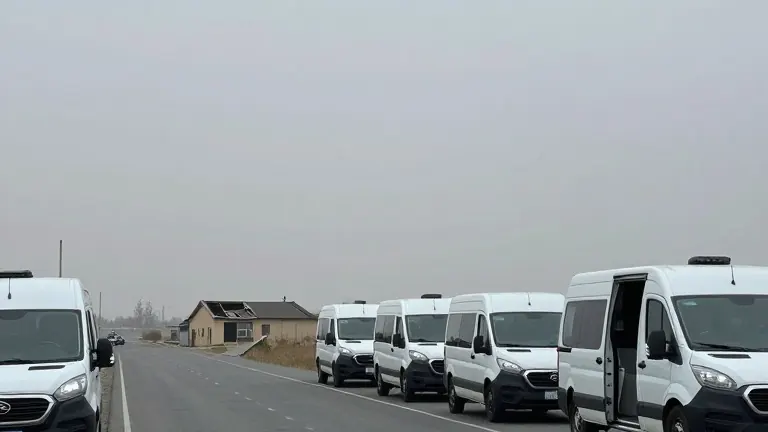
The Oleshky ceasefire served as a humanitarian corridor for residents of the town. US First Lady Melania Trump announced on November 2 that nearly 800 people were evacuated during this period. The operation was part of a broader humanitarian mission aimed at assisting civilians in conflict zones.
Dmytro Lubinets, the Ukrainian Parliament Commissioner for Human Rights, addressed the data from the mission at a press conference. He noted that agreements with the Russian side prevent Ukrainian authorities from disclosing specific numbers on how many residents returned to Ukrainian control versus those who moved to Russian-controlled territory. Lubinets coordinated with his Russian counterpart, Yana Lantratova, to keep these figures confidential.
Lubinets and Lantratova agreed to ask Melania Trump to expand the humanitarian mission model used in Oleshky to other settlements. They identified these other areas as facing difficult conditions for civilians. The proposal seeks to replicate the Oleshky framework to aid more residents in similar situations.