The Hague Verdict: ICJ's Limited Tools to Enforce Myanmar Genocide Ruling
The ICJ ruled Thursday that Myanmar committed genocide against the Rohingya, a decision that binds the state but lacks a direct enforcement mechanism.
By Fatima Saleh ·

The International Court of Justice determined on Thursday that Myanmar committed genocide against the Rohingya Muslim minority. The ruling comes from the United Nations' primary judicial organ, which handles legal disputes between states. This decision marks a formal finding of liability under international law for a conflict that has drawn global attention for years.
The court, known as the World Court, was established under the 1945 UN Charter to provide a permanent venue for nations to resolve conflicts through law rather than force. It held its first session on April 18, 1946. The institution is distinct from the International Criminal Court, which prosecutes individuals for war crimes. The ICJ focuses on the legal obligations of countries. All 193 UN member states can bring cases, though only 75 have filed specific declarations allowing for immediate jurisdiction.
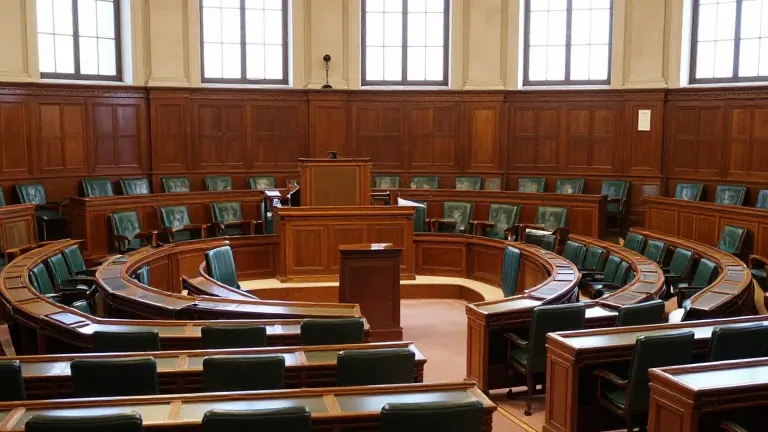
The court currently operates out of the Peace Palace in The Hague. Its panel consists of 15 judges, each serving nine-year terms. These judges hear disputes ranging from maritime boundaries to hostage-taking. They also issue advisory opinions at the request of UN bodies like the General Assembly. While these opinions are not legally binding, they frequently influence decisions in national courts. The court has jurisdiction over more than 300 international treaties, including the 1948 Genocide Convention.
Rulings from the ICJ are binding on the member states involved. There is no higher court to appeal to, yet the body has few direct tools to force compliance. Its power relies largely on moral authority, and some nations have chosen to ignore its orders. The court's docket now includes one-third of cases involving alleged human rights violations. It has become a central stage for major geopolitical disputes in recent years.
The court gained prominence in 2023 when South Africa accused Israel of genocide in Gaza. While the judges ordered emergency measures, the main arguments are not scheduled until late 2029. Israel has maintained that it respects international law while opposing the specific case. In a separate matter, the court ordered Russia to suspend military operations in Ukraine shortly after the invasion began in February 2022. No final ruling has been issued in that proceeding either.
The Myanmar ruling joins these other high-profile cases on the court's books. It serves as a test of whether the institution's findings can influence state behavior without the backing of military force. The decision stands as a legal precedent for how the court applies the Genocide Convention to modern conflicts.