Nationwide Ground Stop Leaves 14-Hour Drives as Only Option at DFW
A five-hour telecom outage halted air travel, forcing stranded passengers to choose between long road trips and uncertain rebooking.
By Fatima Saleh ·
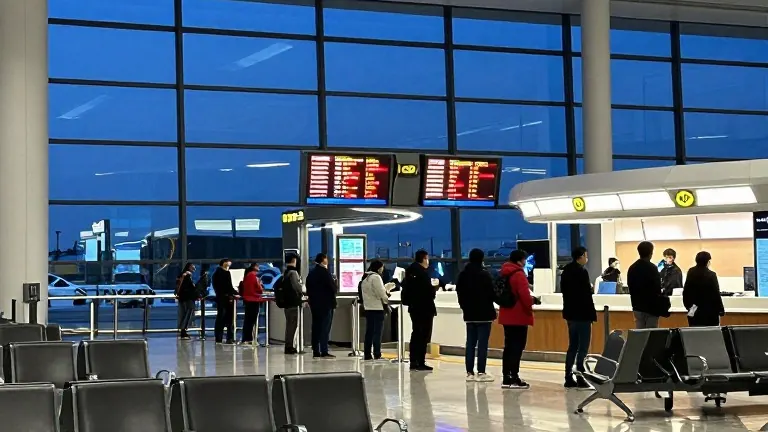
Fourteen hours. That is the estimated drive time for a group of Wisconsin coworkers trying to return home from a conference in Dallas. The long haul became their only viable option after a nationwide ground stop grounded flights at Dallas-Fort Worth International Airport. Federal officials attributed the shutdown to a telecommunications outage. American Airlines reported the disruption lasted five hours. However, the ripple effects extended far beyond the time planes sat on the tarmac.
Passengers faced a sudden halt in travel plans. Departure boards offered no clear timeline for recovery. Mary Gut, a traveler from Wisconsin, described the chaos as her group watched their departure time shift repeatedly. "Well, one group had a flight going out at three. Then it got delayed and then it got delayed again, and then the gate switched," Gut said. Moments later, her colleagues learned of the national shutdown. The group paused to assess the reality of the situation. Justin Popivich, another member of the group, noted the need to determine if the stop was permanent. "So it was kind of like a pause moment to try to figure out, all right, is it real? And then what are we going to do from here?" Popivich said.
With flights canceled, travelers turned to ground transportation. Bus lines sold out quickly. Rental car counters became crowded with passengers seeking an escape from the terminal. For the Wisconsin group, the drive home required approximately 14 hours on the road. Another group of coworkers heading to Pittsburgh faced an even longer journey. They calculated an 18 to 19 hour drive. The disruption scattered coworkers across multiple cities. One traveler reported having colleagues stuck in Cabo San Lucas and various other locations. Many booked nearby hotels or joined long lines for rental vehicles.
Some passengers chose to drive even as the ground stop lifted. Kimberly Borchert stood in a rental car line when the skies reopened. She decided against gambling on another delayed flight. Instead, she planned to use the drive to see new places. "We thought we'd just take advantage, get to where we need to go, and maybe see some new places," Borchert said. For others, the lift in the ground stop meant a return to the airline rebooking process. Airlines began the complex task of recovering schedules and repositioning crews.
American Airlines warned travelers to expect residual delays and cancellations through the night and into the following day. The airline advised passengers to check its app for updates before traveling to the airport. Recovery priorities focused on flights serving non-hub cities and international destinations. This approach meant a return to normal operations would not happen simultaneously for all travelers. Some passengers secured new flights home. Others committed to long drives or additional hotel nights. The five-hour stop turned routine trips into complex logistical challenges for many arriving at DFW.
The event highlighted the fragility of the aviation system. A single telecommunications failure can halt operations across the country. Passengers at DFW adapted to the new reality. They weighed the cost of rebooking against the physical toll of long drives. For the Wisconsin group, the mission remained the same regardless of the method. They planned to use trains, planes, or automobiles to reach their destination. Mary Gut summarized their determination with a simple resolve. "Trains, planes and automobiles. We'll get there," Gut said. The skies reopened, but the journey home continued for many.