Kona Airport Drill: 80 Students Role-Play Passengers in Full-Scale Emergency Simulation
The Hawai‘i Department of Transportation will close Ellison Onizuka Kona International Airport to regular operations from 7 a.m. to 2 p.m. Thursday for a mandatory Federal Aviation Administration exercise.
By Samuel Hayes ·
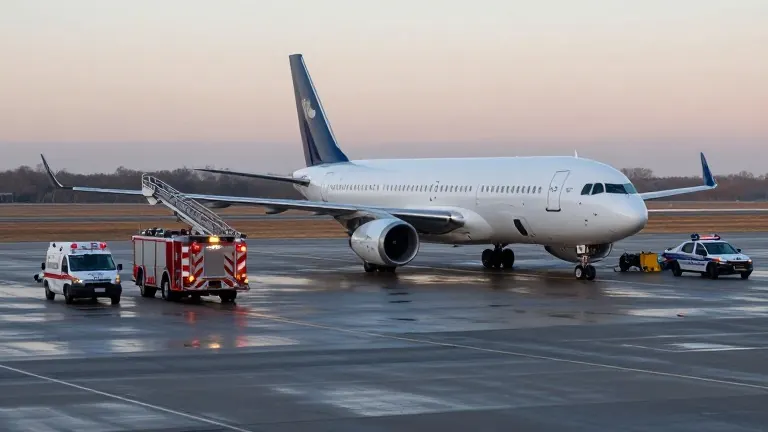
Approximately 80 volunteers will populate the tarmac at Ellison Onizuka Kona International Airport at Keāhole this Thursday, simulating a commercial aircraft emergency. The participants include students from Ke Kula ʻO ʻEhunuikaimalino High School and the Fire Science and Emergency Medical Technician Program at Hawai‘i Community College.
The Hawai‘i Department of Transportation scheduled the full-scale exercise from 7 a.m. to 2 p.m. to satisfy a Federal Aviation Administration requirement that mandates such drills every three years. While officials stated that flight operations will not be affected, the airport will host a concentrated display of emergency response vehicles, mass casualty equipment, and security personnel.
A wide coalition of agencies will coordinate the scenario to evaluate communications, responder actions, and operational effectiveness. Participating groups include KOA Aircraft Rescue and Fire Fighting, the Hawai‘i Fire Department, the Hawai‘i Police Department, and Hawai‘i Civil Defense.
Federal and private partners will also deploy staff on site. The Transportation Security Administration, the National Transportation Safety Board, and the Hawai‘i National Guard are part of the roster. Commercial carrier United Airlines, medical providers American Medical Response and the American Red Cross, and security firm Allied Universal Security will also contribute personnel.
Local residents and travelers are advised to expect visible activity in the Keāhole area during the seven-hour window. Officials instructed the public not to interfere with the exercise or attempt to assist the simulated victims, who will be portraying passengers in distress.
The drill tests the readiness of the region’s emergency infrastructure without requiring actual flights to land or take off. All participating agencies will work in concert to stress-test their joint response protocols.