FAA Lifts Ground Stop After Pilots Navigate System Glitch
Former pilot John Cox says aircraft in flight continued to destinations while controllers scrambled to manage limited runway space.
By Fatima Saleh ·
The Federal Aviation Administration lifted its nationwide ground stop today after a disruption that left many aircraft in the air with limited information.
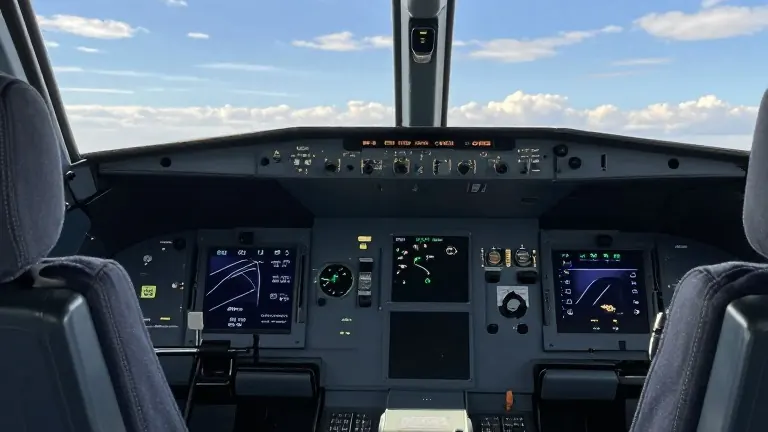
John Cox, a former commercial airline pilot and aviation safety expert, told WFDD Public Radio that pilots on the ground focused on maintaining communication when the stop was active earlier in the day. He said crews used backup frequencies and data link systems such as ACARS or CPDLC to stay connected with air traffic control. Cox noted that the system includes several redundancies to handle such situations.
Cox said the FAA instructed aircraft already en route to continue toward their original destinations. He added that some planes may have entered airborne holding patterns, particularly near congested airports. The primary concern was not security, but the physical lack of space on the ground to land arriving aircraft.
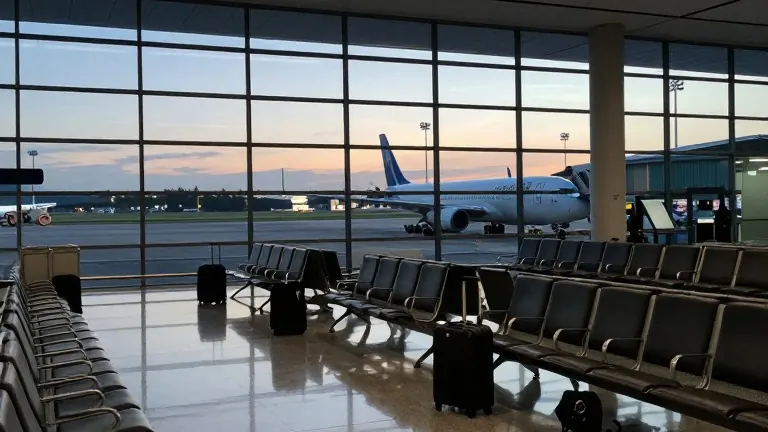
Airport officials at O'Hare in Chicago and Reagan National in Washington indicated they were short on available runway space. Cox explained that with very few departures, these airports backed up with incoming traffic. He said the FAA was looking for commonality between en route traffic control centers to understand how a problem cascaded across the system.
Cox described the communication between pilots and controllers during the cruise phase of flight. He said that in quiet conditions, a pilot might speak to a controller every eight to 20 minutes. In busy airspace near major airports, communication becomes constant, with up to 15 pilots sharing a single frequency. He noted that the FAA command center is reviewing the decision process used during the incident.
Cox identified three key questions for investigators. First, he asked where the commonality was in the center that allowed the problem to spread. Second, he questioned whether a new system or shared infrastructure, such as fiber optic cables, contributed to the failure. Third, he asked how the FAA will reconstruct the system. He said he would ask passengers to be patient and trust the procedures in place to ensure separation from other aircraft.
Cox said the FAA is gathering evidence in the early stages of the investigation. He emphasized that the system is designed to avoid single-point failures, yet a cascading issue occurred today. He concluded that the focus now is on understanding the origin of the problem and how it proliferated between different control centers.
More News · Greensboro news · Report a business · Got a Story?