Iran hits U.S. radar in Bahrain as third attack in five days
The U.S. retaliated with a strike on Qeshm Island, while regional leaders condemned the breach of Bahraini sovereignty.
By Fatima Saleh ·
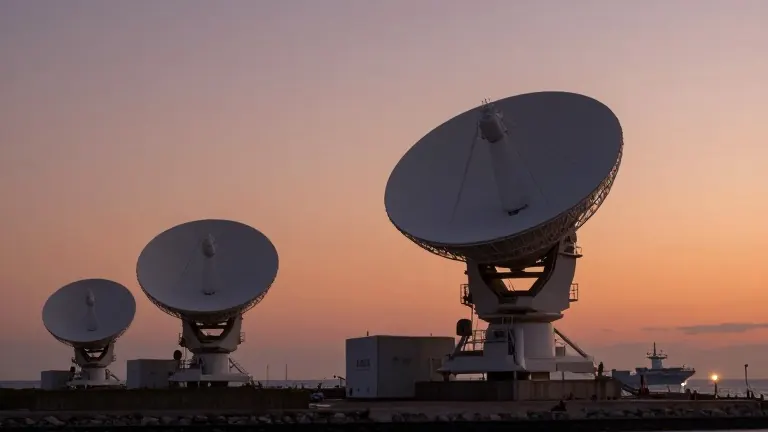
Iran fired drones at a U.S. radar installation in Bahrain on Tuesday, marking the third Iranian attack on American military targets in the Persian Gulf island nation in five days. The strikes interrupted a two-month pause in fighting and prompted an immediate U.S. response. Bahrain reported that its air defense systems intercepted the incoming aircraft without sustaining damage to its own infrastructure.
U.S. military officials confirmed that no American personnel were injured and no equipment was damaged in the initial drone strike. Hours later, a U.S. fighter jet targeted a missile launch site on Qeshm Island. A U.S. official, who spoke on condition of anonymity to describe sensitive operations, stated that precision munitions were used to counter the aggression toward U.S. forces. The local official Ahmad Nafisi noted that the strike on the island caused no damage to residential or commercial areas.
The Qeshm Island target belongs to Iran's Revolutionary Guard and sits within the Strait of Hormuz. This waterway remains a focal point of the conflict, with the U.S. enforcing a naval blockade around the strait to curb the flow of Iranian crude. The blockade has continued to strain Iran's economy even as oil tankers moving through the strait under U.S. protection have helped restore Gulf shipments to prewar levels.
Tehran described the Tuesday attack as retaliation for recent U.S. strikes on Iranian communications towers and drone surveillance operations. The Revolutionary Guard Corps issued a statement asserting that continued aggression against Iranian airspace and the use of regional bases for hostile acts would not go unanswered. Regional neighbors, including Egypt, Qatar, Saudi Arabia, and the United Arab Emirates, condemned the attack on Bahrain as a violation of its sovereignty.
Qatar, which has been mediating peace talks, warned that the ongoing attacks undermine diplomatic efforts. Foreign Ministry spokesman Majed Al Ansari told reporters in Doha that any escalation posed an extremely grave danger to reaching an agreement. The stagnation of negotiations has left Iranian leaders weighing the economic cost of the blockade against the risks of further escalation.
The U.S. has expanded its naval presence in the region to support these operations. The arrival of the USS Theodore Roosevelt carrier strike group means the U.S. now maintains more naval assets in the Persian Gulf, Arabian Sea, Red Sea, and Mediterranean than at the start of the war. The Roosevelt joins the USS George H.W. Bush and the USS George Washington in the area. U.S. Central Command did not comment on whether all three carrier strike groups will remain in the region.
Security analysts suggest Iran may be shifting its strategy as economic pressure mounts. Mostafa Najafi, a Tehran-based security analyst, told The Associated Press that Iran is targeting the operational capability of bases after months of waiting for attacks to respond. Hamidreza Azizi, a senior Iran analyst at the International Crisis Group, wrote that the risk of renewed war now depends on whether Tehran concludes that the costs of continued restraint exceed the risks of escalation.
More World · Greensboro news · Report a business · Got a Story?