IEA Director Doubts Return to Pre-War Norms in Strait of Hormuz
Fatih Birol warns that the recent conflict has permanently altered risk perceptions for one of the world's most critical energy corridors.
By News Media House Staff ·
The International Energy Agency has issued a stark assessment of the global energy landscape following the recent conflict with Iran. Executive Director Fatih Birol stated that the war has severely damaged confidence in the Strait of Hormuz as a dependable route for energy supplies. In a guest essay published on Wednesday, Birol expressed deep skepticism regarding a swift return to the stability that characterized the region before the fighting began.
Writing for The Economist's series titled The World Ahead 2027, Birol noted that he does not see a credible path back to the conditions that existed in February 2026. He highlighted that shipping flows through the strait were previously blocked, an event that caused significant disruption to global oil and gas markets. According to the IEA chief, the possibility of such a blockage happening again has fundamentally changed how the market views the corridor's safety.
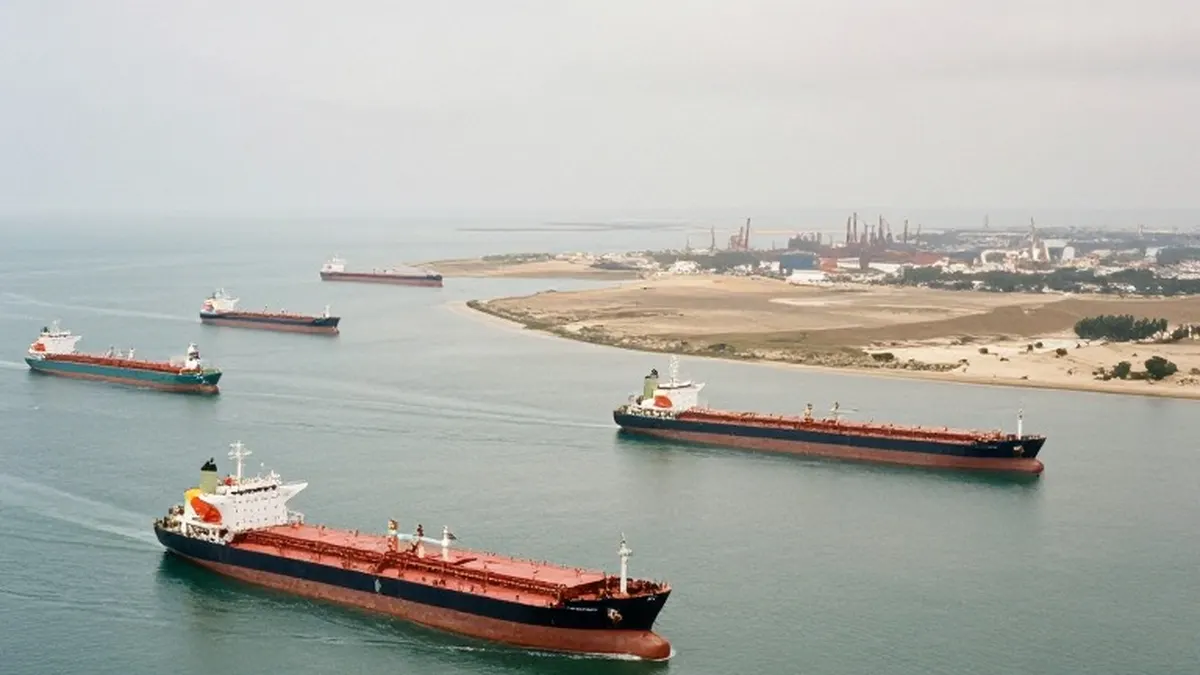
Before the war started on February 28, the Strait of Hormuz served as a vital artery for global energy trade. While Gulf crude exports have seen a recovery in recent months, the IEA's November market report indicates that volumes reached more than 80 percent of pre-war levels by October. However, this progress was interrupted this week when renewed strikes between the United States and Iran broke a period of relative calm in direct combat.
Birol argued that the perception of risk surrounding the strait has shifted permanently. He pointed to the development of new transportation routes, specifically pipelines in Saudi Arabia and the United Arab Emirates, which allow for the bypass of the strait entirely. These alternatives demonstrate that the global energy system is actively adapting to mitigate the vulnerabilities exposed by the recent conflict.
The financial impact of the shifting risk profile is evident in current market prices. As of 6:45 a.m. Eastern Time, U.S. West Texas Intermediate futures were trading at $85 a barrel. Meanwhile, international benchmark Brent crude futures stood at $92.74 a barrel, reflecting the continued premium placed on energy security amid geopolitical uncertainty.
During the height of the crisis, many IEA member nations relied on emergency oil stocks to soften the economic blow. Birol observed that this experience has prompted other regions to seek similar protections. Southeast Asian countries, particularly the Philippines and Thailand, which were among the hardest hit by the initial energy shock, are now looking to build up comparable buffers to enhance their resilience against future supply disruptions.
Looking ahead, Birol predicted that the current crisis will accelerate a global shift toward domestic energy sources. He expects a renewed focus on cost-competitive renewable technologies such as solar and wind power, alongside a resurgence of interest in nuclear energy. However, he cautioned that this transition will require significant investments in stronger electrical grids and advanced battery storage systems to ensure reliability.
The IEA chief emphasized that uncertainty has become a defining feature of the current energy environment. Consequently, decision-makers must be cautious about creating new dependencies while they work to address existing ones. This strategic shift aims to build a more robust and diversified energy framework that can withstand future geopolitical shocks without repeating the severe disruptions seen in the Strait of Hormuz.
Originally published by News Media House
More News · National news · Report a business · Got a Story?