Harbour officials cite loud music as potential cause for bridge failure
Councillor Andrew Brown states external vibrations from music, wind, or traffic likely contributed to the second collapse of the pedestrian structure in October.
By Samuel Hayes ·
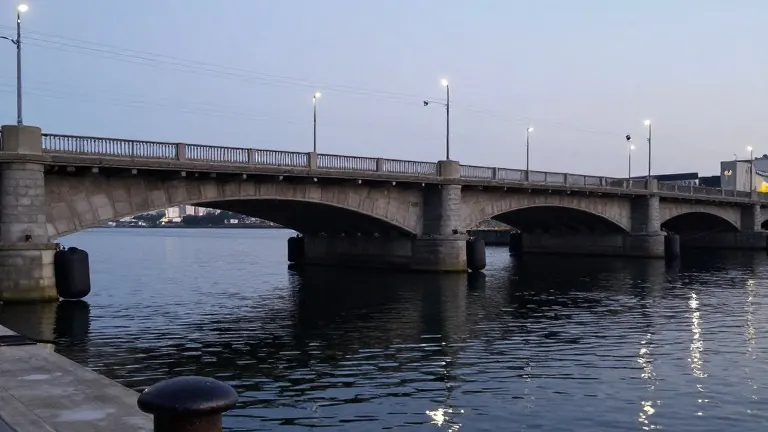
Approximately three tonnes of padlocks had accumulated on Pero’s Bridge in Bristol city centre before officials removed them last year. Councillor Andrew Brown, the chair of the Harbour Committee, stated that this added weight likely damaged the bridge’s operating mechanisms and prevented routine maintenance for several years. The structure is a key pedestrian link over the floating harbour.
The bridge had already been closed to the public since August due to safety concerns discovered during routine testing. It suffered a second failure last Saturday, October 31, when a section of the centre span became submerged shortly before 11 pm. The incident occurred while Halloween revellers were heading to bars and restaurants along the harbour.
Brown said engineers suggest that external vibrations disturbed the balance of the structure. He identified gusts of wind, heavy road traffic, and loud music played through speakers on the shore as potential sources. In early October, lines and strops were installed to support the bridge after movement was detected. These supports were designed to fail if substantial slippage occurred to protect the harbour wall, but they held the structure during Storm Austen.
Since the breakage, teams from Bristol City Council, the Bristol Harbour Authority, and specialist contractors have developed a plan to remove the bridge spans safely. The goal is to return the bridge to use by summer 2027. This process involves working with the original designers and commissioning specialist equipment that is not readily available in the area.
Work on the recovery is expected to begin within the next two weeks, weather permitting. Four large floating rubber fenders with a three metre diameter will be placed to stabilize the centre span while preparations continue. These fenders are designed to absorb impact and protect the structure. Once the spans are lifted to the dry dock, engineers will conduct further inspections to determine the necessary repairs and costs.
Brown noted that the restoration of Pero’s Bridge is part of a wider £7 million investment package for harbour repairs. He explained that regular test lifts, recommended every three months, had been missed due to the complications caused by the accumulated love locks. Removing the locks was the first step toward full refurbishment.
Officials considered building a temporary pedestrian bridge across St Augustine’s Reach while Pero’s Bridge remains closed. Brown said this option would restrict access for ferries and boats needing to reach the Cascade Steps and the two marinas. It would also add cost to the project, diverting funds from the repair and maintenance budget.