Greensboro Reader Questions New Three-Nation Peace Declaration
Local writer Thomas Knapp argues the statement issued in China on November 19 prioritizes maintaining global dominance over resolving active conflicts.
By Fatima Saleh ·
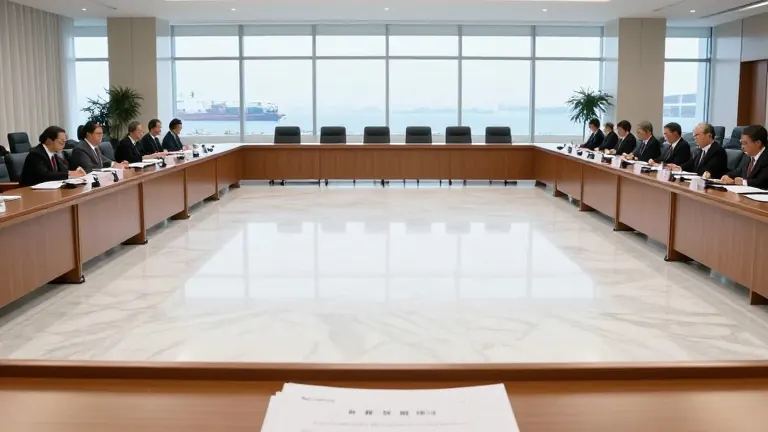
Greensboro resident Thomas Knapp has criticized a new diplomatic statement issued by the leaders of the United States, Russia, and China. Knapp, a contributor to the local Rhino Times, reviewed the document released on November 19 after a summit held in Shenzhen, China. He argues that the declaration, titled by the White House as a “Heads of State Declaration toward Peace,” functions more as a tool to preserve the status quo than to end ongoing wars.
The three leaders, Donald Trump, Vladimir Putin, and Xi Jinping, met in the Chinese city to sign the agreement. Knapp notes that the United States and Russia are currently engaged in costly conflicts with Iran and Ukraine, respectively. China also faces frequent tensions in coastal waters. Knapp suggests that settling these affairs without further hostilities would improve global prosperity, but he believes the document’s details contradict its title.
Knapp points out that only one of the four points in the declaration directly addresses peace. He describes the language throughout the document as vague, signaling that the three parties intend to continue discussions rather than take immediate action. The first point commits the nations to reforming the United Nations so it can respond effectively to global challenges. Knapp argues that a more active UN would require the five permanent members of the Security Council to give up their veto power. He notes that the declaration does not mention any intent to change this veto system.
The second point of the agreement focuses on increasing the production and supply of refined petroleum products. The signatories cite the importance of stable energy flows for all nations. Knapp suggests that stability could be achieved if the United States ended its war with Iran and opened the Strait of Hormuz, or if Russia ended its war with Ukraine and stopped the bombing of its own refineries. He observes that neither Ukraine nor Iran receives a major mention in the text, despite their roles in disrupting energy markets.
Knapp identifies the third point as revealing the true agenda of the summit. The text states that the three heads of state recognized the importance of state consent and respect for the immunities of state officials. It further declares that the International Criminal Court and similar bodies must not abuse their jurisdiction. Knapp interprets this as the leaders expressing frustration at the possibility of being held to justice standards for crimes committed in places under the court’s jurisdiction. He compares this stance to claiming that French courts cannot try someone for a murder in Paris if the alleged murderer is from Paris, Texas.
The final point acknowledges that a nuclear war cannot be won and must never be fought. The leaders agreed to conduct a dialogue on reducing nuclear risks and preventing the spread of nuclear weapons. Knapp notes that the obvious method for reducing these risks would be for the three powers to dramatically cut their nuclear stockpiles, as required by the Non-Proliferation Treaty. However, he says the declaration does not mention such intent. Instead, the focus remains on proliferation, which Knapp suggests means the powers do not want other nations to develop nuclear deterrents against them.
Knapp has described government declarations in the past as full of empty goals and flowery language designed to make politicians look statesmanlike. He believes this specific document fails even that low standard. He concludes that the statement serves as a declaration that the three declining imperial powers intend to remain dominant. He adds that the phrase “dying declaration” takes on new meaning in this context. The document remains in effect as of late November, with no scheduled follow-up meetings announced by any of the three governments.
More News · Greensboro news · Report a business · Got a Story?