Trump, Xi, and Putin Convene for Trilateral Summit in Shenzhen
The three heads of state are meeting on the sidelines of an economic forum, with nuclear arms control and the war in Ukraine expected to dominate the agenda.
By Samuel Hayes ·

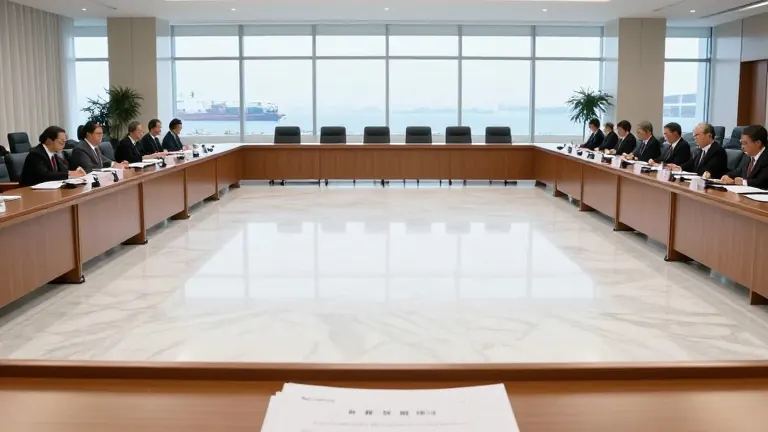
U.S. President Donald Trump, China’s President Xi Jinping, and Russia’s President Vladimir Putin are holding their first trilateral meeting in Shenzhen, China. The talks are taking place on the sidelines of a regional economic forum. China’s government described the gathering as having "groundbreaking significance." White House officials stated that denuclearization is the primary topic for the session, despite indications that China is not eager to engage in that specific conversation.
The summit follows a month of political shifts. Earlier in the month, U.S. midterm elections resulted in a poor performance for Trump’s party. Trump is now on the world stage for the first time since those results. In Moscow, the Kremlin has sought to expand its diplomatic engagements to counter Western isolation efforts following the start of the war in Ukraine. Xi’s hosting of the meeting allows China to project an image of stability and mediation among major powers.
The agenda includes the war in Ukraine, which remains a top global issue. Putin aims to steer conversations toward a peace framework that would involve a major rollback of NATO from Eastern Europe. China has maintained a hands-off political approach to the conflict, noting that it is happening in Europe and that European leaders should be involved in negotiations. The absence of a European head of state at the table limits the potential for a comprehensive deal on the war.
The meeting is occurring amid heightened tensions over technology and trade. The Commerce Department recently restricted China’s access to high-end chips, a move Beijing condemned. This follows the resignation of NVIDIA CEO Jensen Huang over allegations involving a Chinese spy. Trump’s Cabinet members in Shenzhen are split on how to handle China. Commerce Secretary Howard Lutnick favors a laxer policy, while Treasury Secretary Scott Bessent takes a more hawkish approach.
On the nuclear front, a White House official who was not authorized to speak on the record said the administration expects China to engage in the conversation. The official described the moment as "time for China to step up to the adult table." China’s Foreign Ministry previously called it "unreasonable and unfeasible" to include the country in arms control talks at this stage, citing its smaller nuclear stockpile compared to the United States and Russia.
In Shenzhen, Xi greeted Trump at the airport earlier in the day. Xi and Putin also met bilaterally to reaffirm their partnership. The trilateral session is the final major event of the day. The leaders are expected to pose for a joint photograph. No formal agreements are anticipated to emerge from the initial talks.
The next scheduled step involves a potential bilateral meeting between Trump and Putin. Kremlin aides indicated this encounter will occur but may be brief. Meanwhile, in Ukraine, the military continued its operations this week. Ukrainian missiles struck a bridge connecting the Russian mainland to Crimea, a structure widely considered a key project for Putin. President Volodymyr Zelenskyy stated that Ukraine is fighting to determine its own future.
More News · Greensboro news · Report a business · Got a Story?