Greensboro Lakes Fall Below 56 Percent as Dry Weather Persists
With no rain forecast until after Thanksgiving, the city is monitoring water levels closely to determine if Stage 3 restrictions are needed.
By Lauren Foster ·
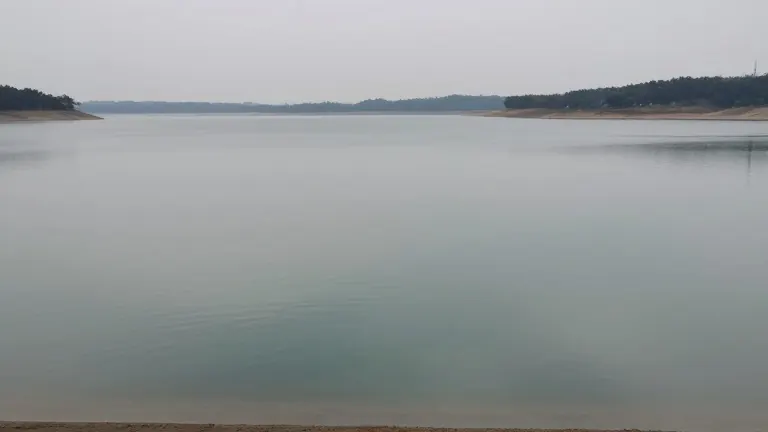
Greensboro’s water reservoirs are dropping at a rate that has city officials watching the weather map closely.
As of 7 a.m. on Monday, Nov. 16, Lake Townsend sat 85 inches below its full capacity. Lake Brandt was 32 inches below full. Neither lake recorded rainfall in the 24 hours prior to that reading. The National Weather Service forecast predicts no measurable rain until Nov. 26, the day after Thanksgiving.
The total storage level for the combined system of Lake Townsend, Lake Brandt, and Lake Higgins reached 56 percent on Nov. 12. This figure is close to the 51.3 percent threshold that triggers Stage 3 drought restrictions. The city asked residents to cut back voluntarily when levels hit 62 percent on Oct. 15. Mandatory Stage 2 restrictions began on Nov. 3 when levels dropped to 57.8 percent.
The water resources director reviews storage levels at least weekly during active restrictions. If the total storage hits the Stage 3 line and current limits have not stopped the decline, the director notifies the city manager. The manager then declares the next stage. The city can also tighten rules before the standard 30-day waiting period if conditions require it. The decision considers the rate of decline, weather outlook, customer usage, and alternative water sources.
Under current Stage 2 rules, residents may run sprinklers once a week on their garbage collection day. If a household has no collection day or has multiple, Wednesday is the allowed day. Hand-held hoses, watering cans, and drip irrigation for non-turf plants are permitted any day. Golf courses and athletic fields with separate meters may irrigate overnight but must reduce use by 40 percent. Commercial plant sellers can water their stock.
If the city moves to Stage 3, the weekly sprinkler allowance disappears for most customers. Hand watering and drip irrigation remain allowed. The required reduction for golf courses and athletic fields increases to 60 percent. Residents can still use commercial car washes, but washing cars in driveways becomes restricted. Ornamental fountains must shut off. Restaurants will serve drinking water only upon request. Licensed commercial pressure washers are exempt from restrictions on washing outdoor surfaces.
Greensboro has experienced similar water shortages in the past. In November 1998, reservoirs fell to about half capacity. The city secured state approval for emergency transfers, though rain arrived before those measures were needed. That year, the City Council adopted a drought-management ordinance and built an emergency line to Winston-Salem. A longer dry stretch followed, with 2002 recording only 30 inches of rain for the federal water year. The city built an emergency line to the Haw River and agreed to buy water from Burlington. Restrictions lifted in November 2002. A serious drought in 2007 and 2008 kept mandatory restrictions in place until April 2008. In 1954, a water crisis led the city to train firefighters and Jaycees to read water meters for enforcement.
More News · Greensboro news · Report a business · Got a Story?