Doctors rely on AI for notes
Family physician Dr. Mara Gordon explains how AI scribes work, where privacy risks lie, and why patients can still opt out.
By Fatima Saleh ·
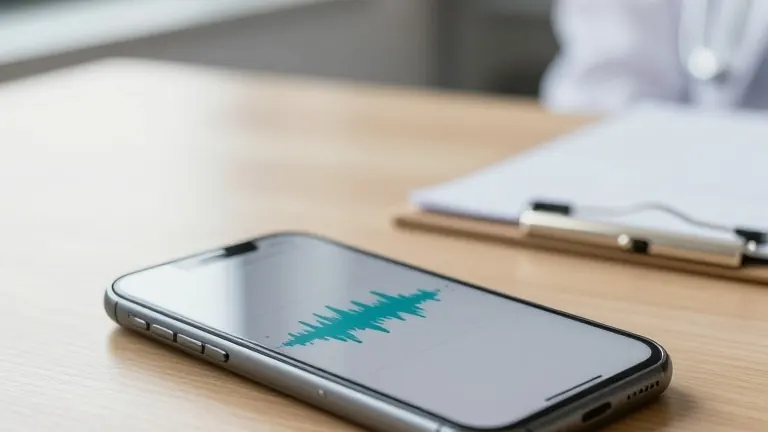
Dr. Mara Gordon, a family physician in Camden, New Jersey, uses an AI scribe during patient visits. She records conversations on her personal smartphone to generate preliminary medical notes. The technology transcribes speech and uses a large language model to draft clinical records.
Gordon said the tool saves her time and allows her to focus on the patient rather than typing. She places the phone on the exam room desk to capture the conversation. The software distinguishes between the doctor and patient voices automatically.
Privacy protocols require the data to upload to a HIPAA-compliant cloud. The system transcribes the audio and then deletes the recording after a set period. Gordon noted that the software company must safeguard the data and is liable if a leak occurs.
Errors can still happen in the automated notes. In one case, a patient with metastatic cancer did not accept his diagnosis. The scribe incorrectly recorded that the patient had been misdiagnosed. Gordon reviewed the note before signing it into the medical record.
Dr. Eileen Kim, an assistant professor of internal medicine at the University of California San Diego, warned that unreviewed AI notes can spread errors through a patient's chart. She described a scenario where an overburdened doctor uses the tool without adequate review time. Kim said AI is now embedded in billing, risk calculators, and early warning systems for conditions like sepsis.
Gordon said she remains responsible for the final content of the note. She edits the AI-generated text to clarify clinical decision-making before signing. Patients who prefer not to be recorded may opt out, and Gordon takes notes by hand as she did before adopting the technology.
Most scribe systems currently operate only with English-speaking patients. Health equity advocates worry this limits access for non-English speakers. Gordon said some patients fear the recordings could be used in malpractice lawsuits, but most companies delete the audio to protect both parties.
Kim said it is difficult for patients to avoid AI entirely in modern healthcare. She noted that machine learning appears in risk calculators for heart disease and other conditions. Gordon believes human intelligence remains central to medicine, adding that AI can sound like a doctor but does not have a real brain.
More News · Greensboro news · Report a business · Got a Story?