70% of Greensboro tattoo clients bring AI art
Hungarian artist Brigi Fuzes says most references are too detailed for skin, forcing artists to strip away digital polish during consultations.
By Fatima Saleh ·
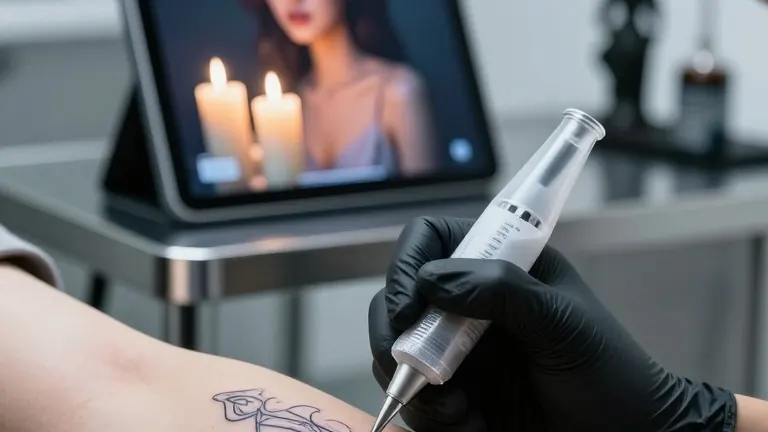
Hungarian tattoo artist Brigi Fuzes estimates that 70% of her clients now arrive with AI-generated images.
These references typically feature hyper-polished portraits, fantasy faces, and animals with cinematic lighting. They look flawless on a phone screen. Translating that digital precision to skin is where the work becomes difficult.
Generative AI creates convincing visuals without accounting for physical movement or aging. A screen supports endless detail, but living tissue does not. Artists like Fuzes must determine if the lighting makes sense and if a hand could actually bend the way the image suggests.
Los Angeles realism artist Andrey Kolbasin notes that the core challenge is how much detail a realism tattoo can hold on a curved, moving surface. The image must remain readable after the skin heals and ages. This differs from flat digital media where contrast can disguise inconsistencies.
Three specific errors appear in nearly every AI reference Fuzes receives. The first is contradictory lighting. A generated face might show a bright highlight on the left forehead while the nose casts a shadow in the opposite direction. Nothing in the scene explains the second light source illuminating the jaw.
The second problem is anatomy. Small structural errors are common, such as fingers joining the hand at the wrong angle or ears placed too low. Jewelry may appear to merge into the skin. These details look normal at first glance but fail under close inspection.
The third issue is excessive detail. AI generates eyelashes, pores, and fabric textures at a scale that works on high-resolution screens. There is no reason for the algorithm to leave enough negative space for those tiny patterns to remain readable on skin years later.
Realism offers less room to hide mistakes than geometric or illustrative styles. If a portrait is slightly wrong, viewers know something feels off. The distance between eyes or the direction of a shadow changes the likeness. In animal portraits, the expression depends on millimeters of space around the eyes and muzzle.
The body also alters the composition. A flat rectangular image does not account for how a design sits across a shoulder or wraps around a forearm. The artist must adjust the proportions to fit the specific placement on the client's body.
AI proves most useful when asked to improve existing materials rather than create new ones. Edinburgh realism artist David Corden uses the technology to clean up old or blurry photographs. This includes restoring faded snapshots of deceased family members for memorial tattoos.
Before these tools, artists used software like Photoshop to clean up references. AI speeds up that restoration process. It can improve contrast and reduce blur, giving the artist more facial information to work with.
However, AI restoration can invent information that was not in the original photograph. An eye may become sharper but subtly change shape. Teeth may appear where the source was too blurry to show them. For a memorial piece, those small changes matter to the family's memory of the subject.
More Culture · Greensboro news · Report a business · Got a Story?