FAA Ends 4-Hour National Ground Stop After 10,000 Delays
Transportation Secretary Sean Duffy attributes the outage to legacy hardware, while passengers at major hubs report long waits and uncertainty.
By Samuel Hayes ·
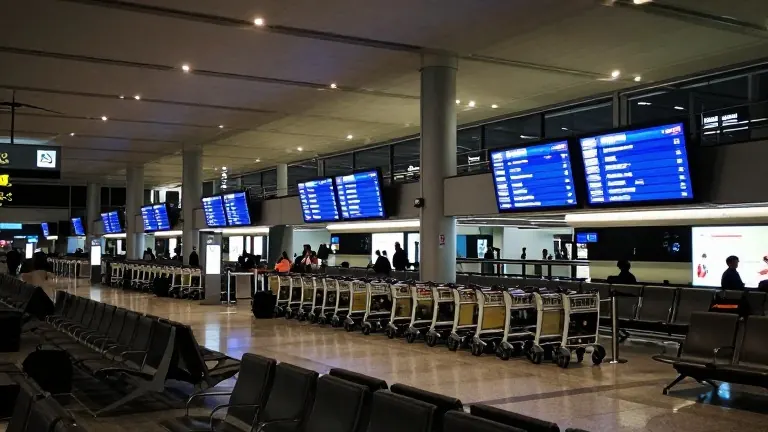
The Federal Aviation Administration lifted a nationwide ground stop at 9:30 p.m. EST on Friday. The action ended a four-hour halt to air traffic across all U.S. airports. This event marks the second national ground stop of this scale since the attacks on September 11, 2001.
Transportation Secretary Sean Duffy addressed reporters at a press conference Friday night. He stated that a communication issue caused the disruption. Duffy identified the root cause as aging infrastructure within the air traffic control network. He noted that the system relies on 1980s technology, including copper lines, old switches, and routers. He explained that the system became overloaded and failed across the country.
Homeland Security Secretary Markwayne Mullin joined Duffy at the event. Mullin said officials found no evidence that a cyberattack triggered the outage. He told the press that the team saw zero evidence of a digital attack. The FAA specified that the failure affected Air Route Traffic Control Centers. These regional centers manage high-altitude traffic across the nation.
Flight tracking data from FlightAware showed the scale of the disruption. As of 8 p.m. EST, more than 10,000 flights had been delayed in the U.S. Another 5,000 flights were canceled. This followed a day of nearly 7,000 flight delays on Thursday. The timing of these outages coincides with the busy holiday travel season.
Regina Harling waited at Dallas Fort Worth International Airport for hours. Her flight to San Diego was delayed well past its scheduled departure time. She learned of the nationwide grounding by checking news updates on her phone. A sign in front of her still indicated boarding would begin in 16 minutes. Harling was traveling for a family emergency and expressed concern about reaching her destination soon.
She described the experience as difficult for travelers. Harling noted that it feels harder to travel now than in the past. She remained uncertain about when she could complete her trip to San Diego.
Giliann Karon was already on a plane at Chicago O'Hare International Airport when the ground stop was ordered. She was heading to New York City. Karon had already experienced a delay the previous day due to bad weather in New York. She described the sudden stop as an expected frustration given the recent history of disruptions.
The FAA has recently started rolling out an AI-enhanced software tool called the SMART system. This tool is part of a larger overhaul of the nation's air traffic control system. Air Space Intelligence, the company that makes the SMART system, stated that its product was not the cause of the Friday disruptions. The company posted on social media that the ground stop was not based on or a result of its integration with the FAA.
The last national ground stop of this magnitude occurred in 2023. That outage stemmed from a failure in the NOTAM system, which alerts pilots to hazards. The FAA later determined that contract workers accidentally deleted critical files during that event. At the Friday night press conference, Duffy said flights would resume but warned that clearing the backlog would take time.
More News · Greensboro news · Report a business · Got a Story?