El-Sayed and Rogers clash for Michigan Senate seat
The race pits a progressive Democrat against a Republican who narrowly lost the state's top congressional contest in 2024.
By Lauren Foster ·
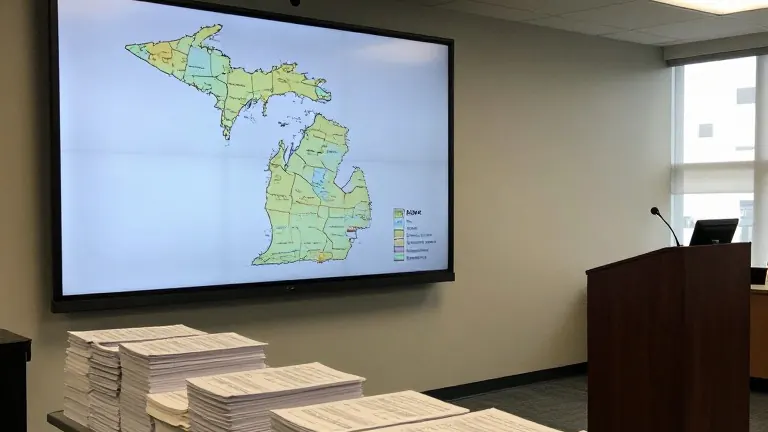
Democrat Abdul El-Sayed and Republican Mike Rogers are competing for the open Michigan Senate seat on Tuesday. The contest is viewed as a decisive test for both parties as they seek control of the U.S. Senate.
El-Sayed aims to demonstrate that a progressive platform focused on universal healthcare can secure a victory in a state President Donald Trump won in 2024. He previously defeated Representative Haley Stevens in a costly Democratic primary. Stevens, an establishment-backed candidate, has since endorsed Rogers in the final days of the general election.
The race has been marked by intense partisan divisions within Michigan's diverse electorate. Disputes regarding U.S. support for Israel and accusations of antisemitism have dominated the discourse. El-Sayed, who would become the first Muslim senator if elected, has faced repeated attempts by Republicans to link him to terrorist organizations. Trump called him a "jihadist" during the campaign.
El-Sayed has pursued a populist strategy to expand the Democratic coalition. He has held campus rallies to target young voters and sought support from disillusioned Republicans in rural areas. The former Wayne County health director has worked to rebuild relationships with Black and Jewish communities after Stevens' endorsement of Rogers created tension among Democratic voters.
Stevens stated that her defection occurred because El-Sayed did not sufficiently address concerns within the Jewish community. El-Sayed was criticized for his initial response to a March synagogue attack in Michigan, where he said, "hurt people hurt people." He later apologized to anyone who found the comments hurtful.
Campaign spending has reached well over $100 million since the August 4 primary. Outside groups spent nearly $60 million during the Democratic primary alone. The American Israel Public Affairs Committee spent nearly $30 million, representing its largest investment in a single race.
Rogers views this election as a second chance after losing the 2024 Senate race by fewer than 20,000 votes. He faced no viable primary challenge this cycle, allowing him to prepare for the general election while Democrats fought a divisive internal contest. The former House Intelligence Committee chairman has aligned closely with Trump, including campaigning with him at an October 25 rally in Port Huron.
The national political environment presents challenges for the Republican candidate. High gas prices and the ongoing war with Iran have weighed on voter sentiment. Rogers has focused his attacks on El-Sayed rather than promoting Republican achievements. In September, Rogers wrote on social media that the war with Iran needs to end quickly.
No Republican has won a Senate seat in Michigan since 1994. The retirement of two-term Democratic Senator Gary Peters created this opening. Democrats need to win four seats to secure a majority in the Senate. The outcome of this race will determine if that goal remains within reach.