Degel HaTorah refuses to name Netanyahu for PM role as Herzog consultations begin
The ultra-Orthodox faction's abstention widens the lead for Gadi Eisenkot, who is expected to receive the mandate to form the next government.
By Fatima Saleh ·
The Degel HaTorah faction of the United Torah Judaism party confirmed on Wednesday that it would not recommend a candidate for prime minister. The group follows instructions from Rabbis Dov Lando and Moshe Hillel Hirsch. This decision aligns the faction with other parties backing Gadi Eisenkot, leader of the Yashar party.
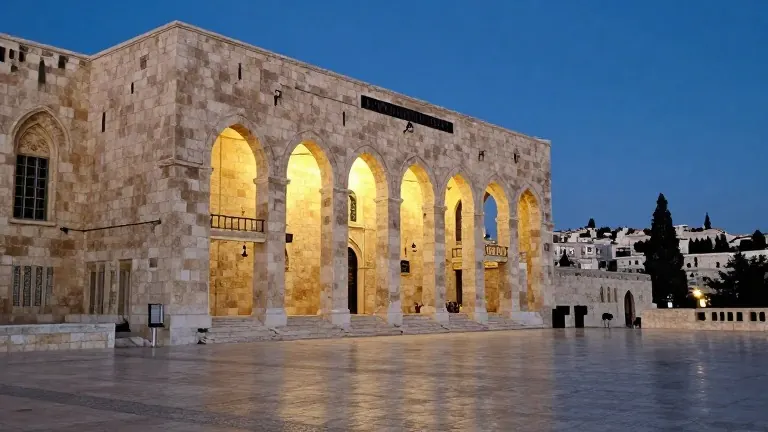
President Isaac Herzog began consultations at the President’s Residence in Jerusalem to determine who will form the next government. The two-day process started with smaller parties on Wednesday evening. It concludes on Thursday with Prime Minister Benjamin Netanyahu’s Likud party. Herzog is legally required to grant the mandate to the lawmaker he believes has the best chance of building a coalition, not necessarily the leader of the largest party.
Degel HaTorah holds four of the seven seats won by United Torah Judaism in the 26th Knesset. The faction includes party chairman MK Yaakov Asher. Its abstention highlights a rift with Netanyahu over the failure to pass a law guaranteeing military service exemptions for Haredi men. The remaining three United Torah Judaism seats belong to the Agudat Yisrael faction, which has not yet announced its recommendation.
By the end of Wednesday night, Eisenkot held a clear lead in recommendations. The Arab-led Ra’am party announced support for his candidacy. Religious Zionism, Otzma Yehudit, Shas, and Likud had already stated they would recommend Netanyahu. Yisrael Beytenu, the Democrats, and B’Yachad also pledged their support to Eisenkot. The Arab-led Joint List had not yet indicated whether it would back Eisenkot or abstain.
Consultations began with Religious Zionism, which won six seats in a technical bloc with Zehut. Settlements Minister Orit Strock represented the party alongside incoming lawmakers Tzvika Mor and Itamar Eitam. Strock recommended Netanyahu and called for a broad national government. She told Herzog that the Arab parties were not legitimate participants in the process because they are nationalists. Herzog challenged this view, asking how to distinguish the argument from racism. He noted that Yoav Segalovitz, a Jewish police commander, was the number two candidate on Ra’am’s list.
Zehut’s sole MK, Moshe Feiglin, also recommended Netanyahu for the mandate. Feiglin expressed concern that a dark cloud hangs over the election’s legitimacy due to ongoing voter fraud investigations. His party director general stated the group would be happy to join any government that aligns with its principles and prevents future massacres. Feiglin clarified that this offer did not extend to Arab parties.
Shas, which won six seats, confirmed its support for Netanyahu during its meeting with Herzog. MK Michael Malkieli defended the party’s stance on military conscription. He said Shas has never disrespected IDF soldiers but prioritizes recognizing the value of Torah scholars. When Herzog asked why Shas remained silent on the possibility of a unity government, representatives stated that Netanyahu would form such a government if granted the mandate.
Yisrael Beytenu, which won seven seats, reaffirmed its endorsement of Eisenkot. Party chair Avigdor Liberman had previously ruled out relying on Arab or Haredi parties, sitting with Netanyahu, or holding a second election. MK Oded Forer told Herzog that the current government is not right-wing in its policies and has not taken responsibility for the October 7 massacre. Forer stated that Yisrael Beytenu’s refusal to work with certain parties is strategic rather than personal. The party requires partners to define Hamas as a terrorist organization.
The consultations are scheduled to resume on Thursday at 8:30 a.m. with United Torah Judaism. Eisenkot is expected to receive at least 56 recommendations for the mandate, compared to 53 for Netanyahu. If Eisenkot receives the mandate, he will have a maximum of 42 days to form a coalition. He faces internal opposition within his bloc regarding alliances with both Arab and Haredi parties.