Clocks and Crops: Experts Debunk Daylight Saving Myths
A pediatrician and a farm official explain why the upcoming time change affects sleep and agriculture differently than most people think.
By Lauren Foster ·
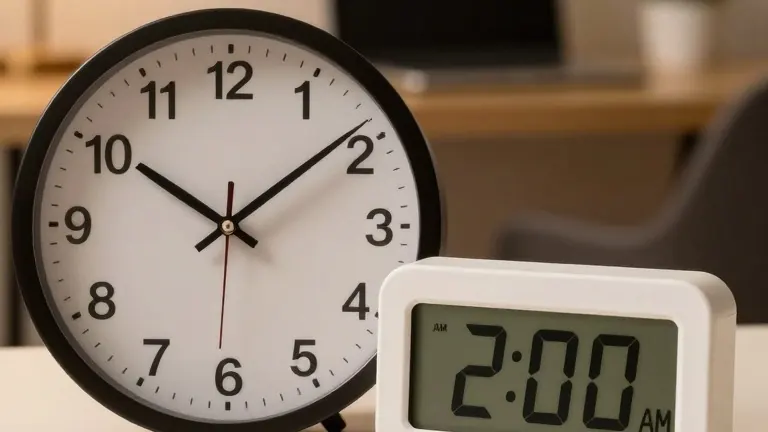
Clocks will fall back one hour at 2 a.m. on Sunday, Nov. 1, marking the end of daylight saving time for residents in the Omaha area.
Common beliefs surrounding the annual shift often contradict the experiences of those who manage children's sleep or operate modern farms. Two local experts addressed these misconceptions this week.
Dr. Clara Brown, a pediatrician at Boys Town, noted that the body does not automatically benefit from the extra hour of sleep. She compared the adjustment to a mild case of jet lag that occurs without leaving the house. For parents, the shift frequently results in early morning wake-ups or difficult bedtimes. Brown advised families to begin adjusting schedules immediately. She recommended pushing a child’s bedtime back by approximately 15 minutes each night for the next few nights, starting on the evening of the time change.
The Nebraska Farm Bureau also challenged the long-held view that daylight saving time was designed to aid farmers. Jordan Dux, the organization’s senior director of national affairs, stated that modern agricultural technology has reduced the reliance on daylight hours. He pointed to the prevalence of lighting systems and GPS technology in contemporary machinery. Dux said the connection between the clock and farming is less vital now than it was in previous eras.
Despite the reduced practical impact on agriculture, the Farm Bureau holds a clear preference for the future of the time change. Dux said the organization does not have a strong opinion on whether the country should keep daylight saving time or standard time. He emphasized that the group simply wants the schedule to remain consistent.
Experts expect the transition to be manageable for most households. Brown said it typically takes a few days for young children to adapt to the new schedule. She recommended that parents consult with a pediatrician if sleep problems persist for more than one or two weeks after the change.
The time change will occur automatically on digital devices and clocks at 2 a.m. on Sunday, Nov. 1.
Source: WOWT