Charlotte Police Chief to Review Data on Racial Gaps in Traffic Stops
Chief Estella Patterson will meet with community groups after data showed Black drivers are stopped at higher rates than white drivers for all types of traffic stops.
By Fatima Saleh ·
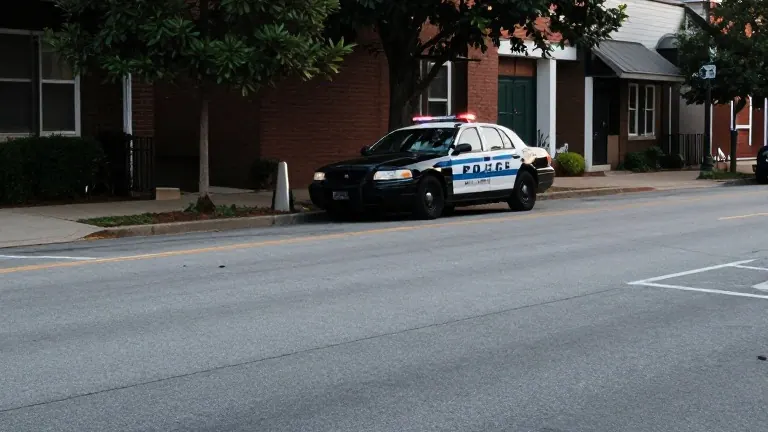
Charlotte police leadership will examine racial disparities in traffic stops following a review of department data. Chief Estella Patterson confirmed the department will meet with community organizations in the coming weeks to discuss the findings.
The review follows a report released on October 28 indicating that Black drivers in Charlotte are stopped at higher rates than white drivers across every category of traffic stop. The data also showed that the gaps in search and arrest rates following these stops have widened in recent years.
Patterson acknowledged that seven officers participated in a text thread containing racist statements for several years. She confirmed this fact to the public in October, which intensified calls from local groups for the department to change its approach to traffic enforcement.
The Second Chance Federation, a nonprofit that assists residents after incarceration, has asked the Charlotte-Mecklenburg Police Department to suspend stops for regulatory infractions. The group argues that stops for issues like broken tail lights or expired registrations lead to searches and arrests that disproportionately impact Black drivers.
Rev. Corine Mack, president of the Charlotte chapter of the NAACP, met with Patterson last week to discuss the text thread and the stop data. Mack said the chief appeared willing to adjust department practices.
“She’s open to doing something different,” Mack said. “We have a lot more to work through, but I was happy about that.”
Other North Carolina law enforcement agencies have made similar changes in the past. The Mecklenburg County Sheriff’s Office ended regulatory stops in 2022. The Fayetteville Police Department made a similar shift in 2013, focusing instead on safety-related stops such as speeding. A University of North Carolina Chapel Hill study found that the Fayetteville change resulted in fewer crashes and reduced the gap in stop rates between Black and white drivers.
CMPD spokesperson Erin Wiggins stated that the department is weighing multiple factors in its review. “There is a lot to be considered,” Wiggins said. “and the data is only one piece of that. It’s an important piece, but it is only one piece.”
Mack wants the department to review its stop policies and require ongoing implicit bias training for officers. Her organization plans to meet with Patterson again in November after the chief reviews the data. Mack expressed confidence in Patterson, who returned to Charlotte in 2025 to lead the department after a long career in law enforcement.
“I’m hopeful,” Mack said. “I think that Stella Patterson is the chief that we need for today.”
More News · Greensboro news · Report a business · Got a Story?