Austen fanbase gets new voice in 'Miss Bates'
Catherine Cliff's debut novel gives a complex inner life to the talkative spinster from 'Emma', challenging the original character's reputation.
By Lauren Foster ·
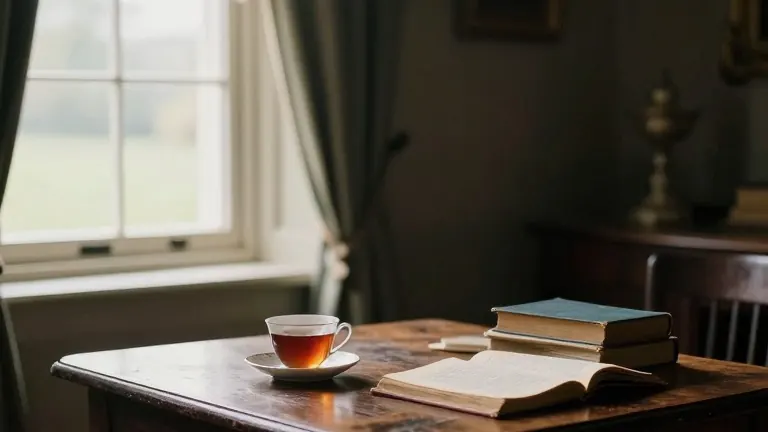
One author's literary excursion into another writer's work can feel like a competition or a picking-over of ideas. Whether the goal is to conjure a prequel, fill a narrative gap, or reimagine a classic in a modern setting, using existing characters as a springboard often yields fresh perspectives. Barbara Kingsolver recently spun David Copperfield into modern-day Appalachia in Demon Copperhead. Now Catherine Cliff has chosen Jane Austen as her starting point.
Choosing Austen is a brave move. The writer has a devoted fan base, and her characters come with enough personality to work from. Janice Hadlow's The Other Bennet Sister proved that Austen's world offers fertile ground for new storytelling. In Miss Bates, Cliff gives a complex, spirited inner life to a classic secondary character: Henrietta Bates, also known as Henrie, Hetty, and Henny. In the original text, she is a plain, impecunious, and talkative spinster whose existence is treated as a spectator sport.
The novel explores Henrie's deep adoration for her beautiful younger sister, Jeannette. The wedding day was described as the second worst day in Henrie's life. When Jeannette and her husband died suddenly, their daughter Jane Fairfax, who was the same age as Emma Wodehouse, was sent to live with Henrie and her mother. Since childhood, Henrie has used a spray of words as a stand-in for the other powers she did not have.
In Emma, Miss Bates is mocked by the title character for talking too much. Emma only begins to see her own arrogance after Mr. Knightley calls out her cruel behavior. However, the new narrative reveals that Henrie has long been aware of Emma's selfishness. She describes herself as immune to Emma's contagious sky-high self-regard. This shift in perspective allows the reader to see the character beyond the original text's limited portrayal.
Early chapters, which focus on Henrie as a child, take time to find their footing. Her powerful inner voice has not yet fully developed. Once Henrie fully understands her circumstances, she plays her cards with style. She develops an ability to get even with those who wrong her. The story focuses on knowing oneself and understanding that not speaking the truth is not the same as ignorance of what is right or fair.
Catherine Cliff has written a witty and ambitious debut. The author of Miss Bates hopes Jane Austen would approve. Henrietta McKervey's latest novel, The Woman in the Water, is inspired by a lost character in Daphne du Maurier's Rebecca. The Irish Times reviewed the new work, noting its ambition and wit.