
Escalating settler violence sparks debate over IDF deployment strategy
Rising settler violence in the West Bank has intensified internal debates over IDF deployment strategies, with officials weighing the need for more troops against the demands of northern border readiness.
By News Media House Staff ·
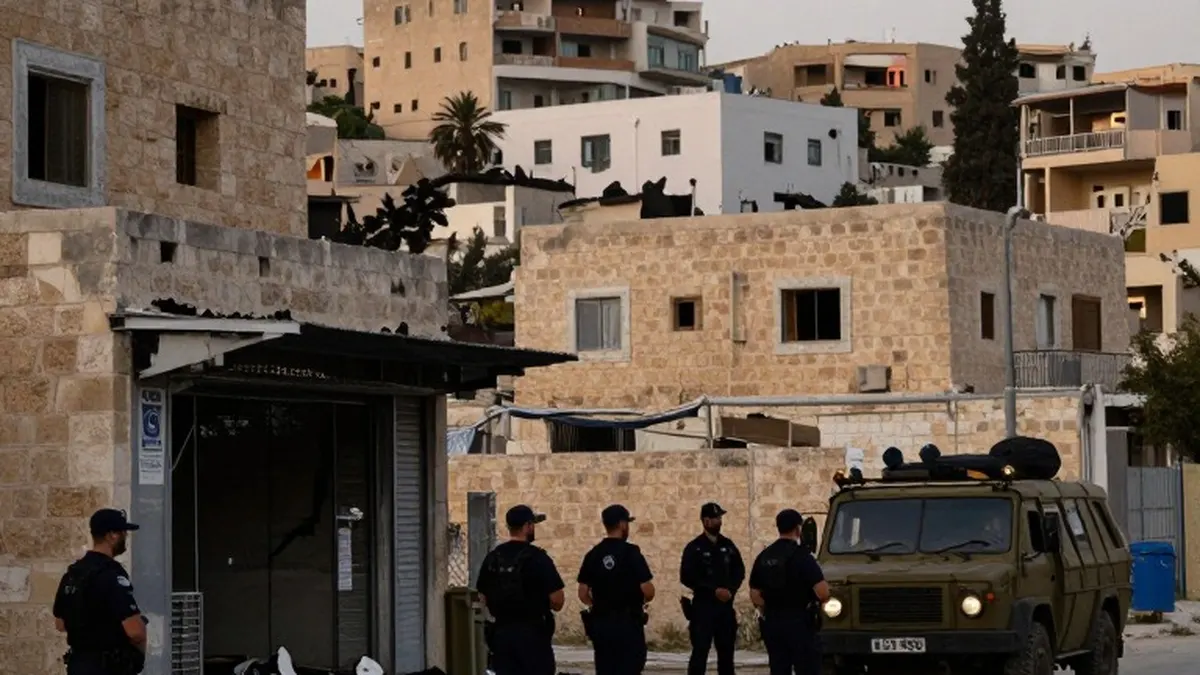
Nationalist violence in the West Bank has intensified over the past several days, prompting renewed scrutiny of military strategies in the region. Four distinct incidents involving arson, property damage, and threatening graffiti were reported between Saturday and Sunday. While Israel Police investigators from the Judea and Samaria District completed evidence collection and interviewed witnesses, no suspects had been arrested at the time of the initial reports.
The surge in attacks has fueled criticism within Israel's security establishment regarding the presence of military forces in areas known for friction between Israeli settlers and Palestinians. Security officials have questioned why the Israel Defense Forces have not maintained a heightened presence in known hotspots, despite assessments suggesting that larger deployments effectively deter nationalist violence.
Central Command chief Maj.-Gen. Avi Bluth reportedly stated in closed-door discussions that incidents were prevented wherever the IDF maintained a substantial footprint. He cited the activities of the Paratroopers Brigade in the Binyamin Regional Brigade sector and the deployment of the 98th Division in the Etzion and Judea Regional Brigades' areas of responsibility until about two weeks prior as examples of successful deterrence.
Despite this evidence, security officials criticized the decision-making process, asking why reinforcements were not deployed to recurring flashpoints. They warned that the situation could deteriorate rapidly without additional troops. Central Command rejected the criticism, explaining that the 98th Division's deployment was a preventive measure planned ahead of a sensitive period that included religious holidays, elections, and the annual olive harvest.
A senior military official clarified that the deployment was not a reaction to a single incident but an effort to reduce the risk of broader instability. The official stated that the 98th Division was brought into Judea and Samaria before the situation worsened. The division has since withdrawn, with officials noting that its mission was completed successfully after several major counterterrorism operations and that no civilians were injured during its stay.
The withdrawal has raised questions about whether maintaining an increased military presence could prevent future attacks. A senior Central Command official emphasized that the 98th Division must remain available for potential operations along the northern border, stating that it needs to be ready for war in Lebanon. The official added that the six-week deployment significantly improved operational readiness in the West Bank, including for scenarios where Palestinian Authority security forces might turn their weapons against Israeli forces or civilians.
Beyond immediate security concerns, the senior official addressed broader challenges such as population growth and expanding infrastructure. He argued that the security establishment must strengthen law enforcement capabilities rather than rely exclusively on additional military deployments. Central Command officials maintained that nationalist violence is primarily a law enforcement problem requiring arrests and prosecutions, rather than necessarily requiring more combat troops.
Accordingly, officials called for reinforcing the Israel Police's Judea and Samaria District, potentially by reallocating personnel from other districts. This distinction between military and police responsibilities is becoming increasingly significant as the IDF seeks to maintain counterterrorism operations while responding to attacks involving Israeli extremists.
Central Command has also begun internal discussions regarding the future structure of military command in the West Bank. One proposal under consideration involves establishing an additional divisional headquarters to address the growing operational burden on the existing Judea and Samaria Division, which currently oversees six regional brigades. A military official confirmed that a formal discussion took place in the presence of the Central Command chief, producing preliminary conclusions.
However, the proposal has not yet been presented in full to IDF Chief of Staff Lt.-Gen. Eyal Zamir, and no final decision has been made regarding the establishment of another division. The discussions reflect concerns that the division's extensive geographical responsibilities and the increasing complexity of security operations are placing significant pressure on its command structure.
Originally published by News Media House





