Ukraine conducts largest drone assault on Russia since invasion began
Ukraine launched its largest drone attack on Russia since the start of the war, with Russian air defenses intercepting over 1,300 drones in a bid to disrupt economic assets and military logistics.
By News Media House Staff ·
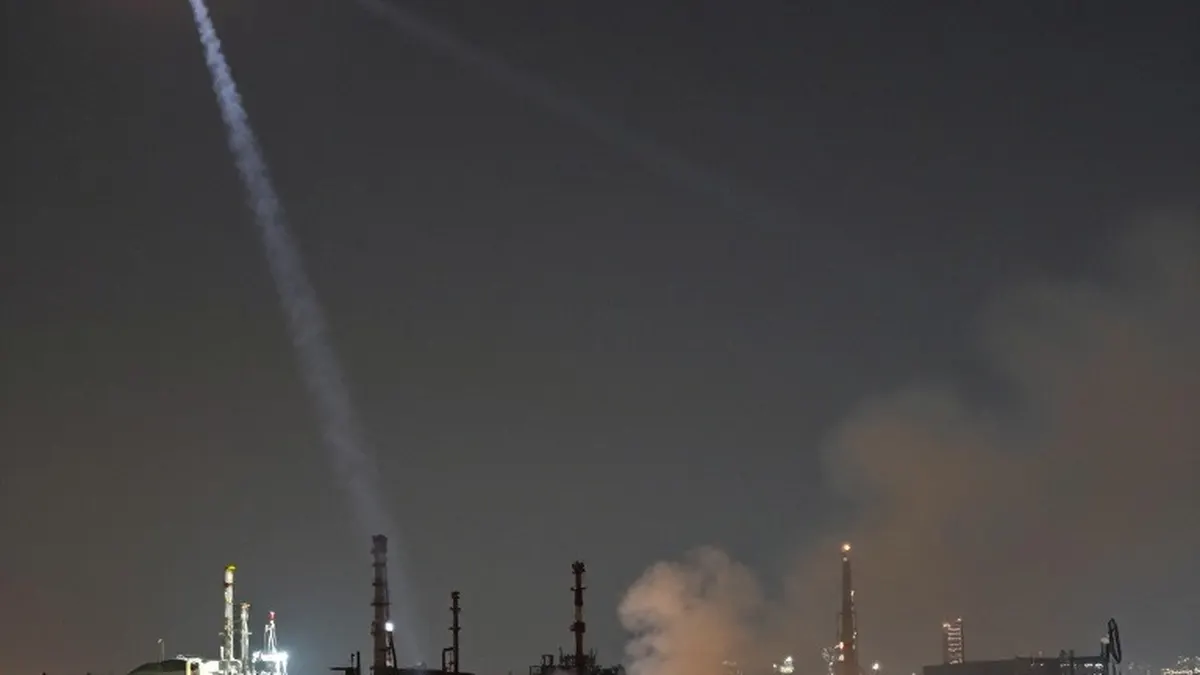
Russia's Defence Ministry announced on Monday that its air defense systems intercepted 1,336 drones launched by Ukraine. This event marks the most significant aerial attack on Russian territory since Moscow initiated its full-scale invasion nearly five years ago. The scale of the operation represents a major escalation in the conflict's aerial dimension.
Ukrainian forces have increasingly targeted deep strikes within Russia, including the illegally annexed Crimea and the Black and Azov seas. In recent months, some attacks have involved more than 1,000 drones. These operations aim to disrupt Russian economic assets and military logistics while simultaneously signaling Ukraine's continued capacity to fight.
The assault caused notable disruptions across several Russian regions. In the southern Krasnodar region, six people were wounded near the Ilsky oil refinery, a site frequently targeted by Ukrainian drones. Governor Yuri Slyusar reported that three people were injured in the city of Azov within the Rostov region, where two oil depots are located.
The Moscow region faced a particularly heavy barrage. Mayor Sergei Sobyanin stated that approximately 600 drones flew toward the capital overnight. While the majority were intercepted at a distance, 191 were shot down as they approached the city limits.
Ukrainian President Volodymyr Zelenskyy claimed late Sunday that recent attacks have disabled over 55 percent of Russia's oil refining capacity. Although Russian officials have not officially commented on this figure and independent verification remains difficult, President Vladimir Putin acknowledged the economic cost on October 1. He estimated that the strikes had reduced Russia's gross domestic product by roughly one percent.
Analysts note that these long-range strikes serve multiple strategic purposes. They aim to make the war felt by civilians in Russia, disrupt front-line supply routes, and weaken Moscow's battlefield momentum. Additionally, Kyiv is keen to demonstrate to its international supporters that it remains a potent force in the conflict, countering Moscow's narrative of inevitable victory.
Ukrainian forces are also adapting to technical challenges. Officials noted that new speed limits imposed on the Starshield satellite internet system have weakened air defenses. In response, Ukraine is launching pre-emptive attacks on Russian weapons production plants and drone launch sites to mitigate the disadvantage.
While Ukraine escalates its offensive, it continues to face relentless strikes from Russia aimed at breaking civilian morale. The conflict has killed hundreds of thousands of soldiers and thousands of Ukrainian civilians, according to Western analysts. Russians are bracing for a difficult winter as strikes on the power grid deny civilians heat, light, and water.
Prime Minister Serhii Koretskyi reported that strikes on power infrastructure in the Zaporizhzhia and Dnipropetrovsk regions left hundreds of thousands without electricity. Zelenskyy described the Russian strategy as brutal bombardment designed to flatten energy infrastructure. He noted that the Dnipro region has endured 131 strikes since September, while the Kyiv region has faced 125.
The intensity of Russian attacks remains high. Zelenskyy stated that in the past week alone, Russia launched over 2,300 attack drones, 1,590 glide bombs, and 15 missiles. In the Donetsk region, head of the Regional Military Administration Vadym Filashkin reported that four people were killed and three injured in shelling over the previous day. One person was also killed and three injured in a strike on Dnipro on Monday morning.
Originally published by News Media House