Tulsa neon signs glow brighter as Route 66 businesses seek old-school charm
More than 100 signs now light the streets in Tulsa, following a 2019 grant program and the restoration of the massive Meadow Gold landmark.
By Lauren Foster ·
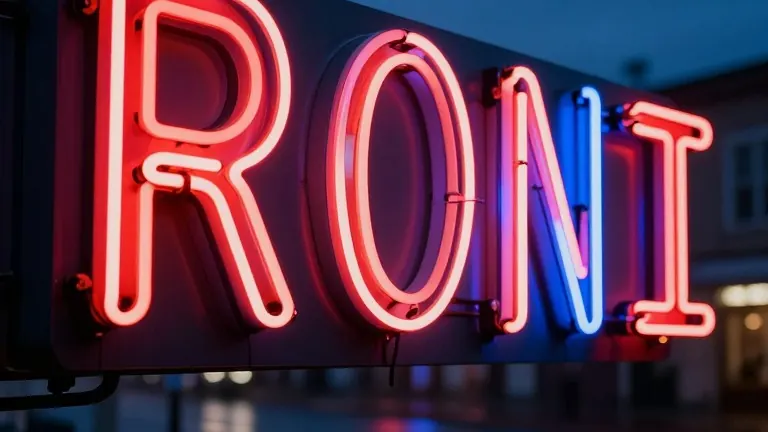
Tulsa now has more than 100 neon signs, a number that has grown since the Tulsa Route 66 Commission began a grant program in 2019. The funds helped businesses create new signs or restore old ones as part of the lead-up to the route's centennial.
The comeback is led by CNF Signs, a Tulsa company that traces its roots to a franchise sold by Georges Claude in 1926. Claude invented the technology in 1910 by running electricity through neon gas tubing. The first sign appeared in the United States in 1922 at a Packard car dealership in Detroit. Traffic reportedly jammed as people stopped to look at the glowing glass.
CNF Signs still employs artisans known as neon benders. They heat glass tubes in a fire and shape them by hand. Tom Wolski is one of these craftspeople. He works in a studio that contains fire, phosphorus, mercury, and high-voltage electricity.
"It is kind of dangerous; you have to pay attention to what you're doing," Wolski said. He added that he loves the work despite the risks. Wolski was once one of two full-time benders at the company, but demand for the traditional method has dropped because the signs are expensive.
Many businesses have switched to LED lights, which are cheaper to build and operate. Joe Kesterson, a senior designer at CNF Signs, argues that LEDs lack the beauty of real neon. He notes that neon glows like a candle, while LEDs are brighter and sharper.
"Once you see both of them together, you can see [the LEDs] have almost a harshness to the light," Kesterson said. He also noted that only red neon is made with neon gas. Blue and green lights use argon gas mixed with mercury and a phosphor coating. The combination creates colors that often surprise the designers.
Kathleen Franz, an associate director at the National Museum of American History, said neon signs signaled to travelers that a business was modern and safe. That reputation helped Route 66 become a hub for gas stations, motels, and restaurants during the 1940s and 1950s. Tulsa embraced the trend with large-scale installations.
The Meadow Gold sign is a local landmark. Built in 1934, the dairy advertisement is the size of a school bus with letters seven feet high. It was stored for decades after the business closed. CNF Signs restored the porcelain letters and relit the sign in 2009. Today, the sign sits in the Meadow Gold section of town, near other restored replicas in Neon Sign Park at Cyrus Avery Plaza.
More Business · Greensboro news · Scam Watch · Report a business · Got a Story?