Trump details Asia trip to Xi and Putin at White House
The president announced joint AI guardrails with China and outlined a strategy for U.S. data centers during a Friday press briefing.
By Samuel Hayes ·
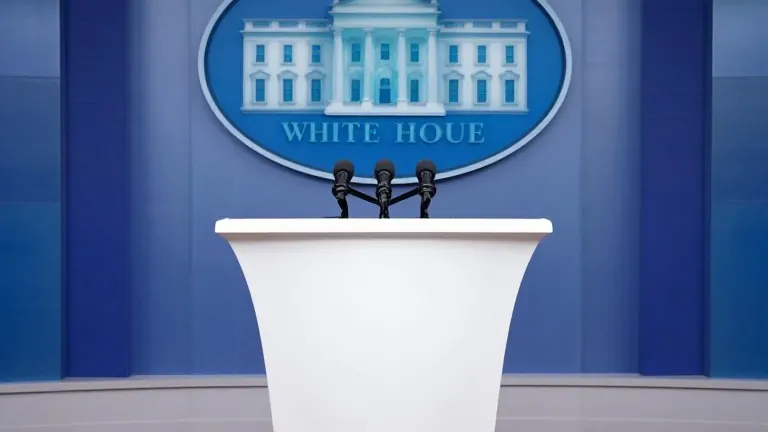
President Trump returned to the White House on Friday to discuss his recent diplomatic tour of Asia, where he held trilateral meetings with Chinese President Xi Jinping and Russian President Vladimir Putin. The president stood before the press alongside Vice President JD Vance and Secretary of State Marco Rubio to outline the outcomes of the summit.
Trump stated that the United States entered the negotiations from a position of unmatched economic and diplomatic strength. He emphasized that the three leaders gathered at a lakeside resort in Shenzhen, China, where they sat around a large round wooden table to address nuclear proliferation, Iran, and global relations.
The primary tangible result from the summit was an agreement on joint guardrails for the development of artificial intelligence. Trump noted that Xi prefers the term super intelligence and that both leaders agreed the technology could be too powerful without limits. "Problem is, it may be too super. So, President Xi and I agree that we're going to do some joint guardrails, the two of us," Trump said.
The president also addressed the semiconductor market, specifically regarding the sale of U.S. chips to China. He said the administration wants to sell only older chips to Beijing, acknowledging that China manufactures its own. "We want only older chips, and we don't mind if none go, but only older. You have to understand, China makes chips too, and if we're not going to sell them, they'll make them themselves," he explained.
Trump outlined a plan to keep data center construction within the United States. He urged companies to pay their local communities while warning that if domestic opportunities fail, other nations will fill the void. "We're not going to allow our companies to build data centers outside of our country. We're not going to allow that to happen," he asserted.
Suzanne Maloney, vice president and director of the foreign policy program at the Brookings Institution, analyzed the trip as a display of great power amity following a bruising domestic election. She said Trump sought the optics of direct engagement with Xi and Putin to validate his standing as a historical figure. "I think the photo op provided that," Maloney said. The summit yielded few signs that either foreign leader was prepared to make major concessions to the U.S. president.
Vance and Rubio spoke briefly before the president, with Vance saying he missed the president and Rubio recounting the highlights from the overseas itinerary. Trump said he would continue to push for domestic data center construction and that the joint statement on nuclear risks would continue to guide future discussions.