Train crash hits Sanchez campaign before vote
A deadly derailment in Toledo province forces a tonal shift for the Prime Minister days before a snap election on November 29.
By Samuel Hayes ·
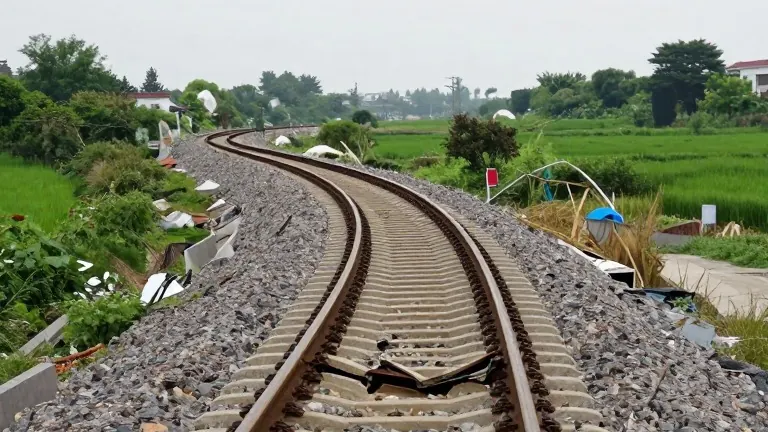
Spanish Prime Minister Pedro Sanchez faced a new hurdle on Wednesday after a high-speed train crash killed 68 people in Toledo province. The accident struck just nine months after another fatal collision on the same line, injecting a sharp element of infrastructure criticism into the snap election campaign scheduled for November 29.
Sanchez had planned to leverage public anger over the recent death of an evicted octogenarian to consolidate support. He had been trailing in most opinion polls but appeared to gain traction with an October survey by state-run pollster CIS showing his party ahead. The crash now forces him to address questions about railway safety while maintaining his image as a candidate of progress against a potential far-right return.
At the accident site, Sanchez described the event as a terrible tragedy and pledged to investigate all failures. He stated that it was unacceptable for Spain to suffer two high-speed rail accidents in the same year. Transport Minister Oscar Puente rejected claims that the network was dangerous, describing the system as reliable and safe within the limits of material and human action. He declined to say whether he would step down, noting it was not the time to discuss his own position.
Political opponents moved quickly to capitalize on the incident. Alberto Nuñez Feijoo, president of the conservative People’s Party, argued that mourning did not require silence and promised a full network review if his party took power. Santiago Abascal, leader of the far-right Vox party, told a rally that the government had destroyed infrastructure and would not use shared grief to silence condemnation of the current administration.
Public confidence in rail services has eroded since the previous accident. Polls conducted in January showed that 57% of Spaniards perceived a worsening of rail services since Sanchez took office. Nearly 60% reported little or no trust in the railway system. High-speed rail usage, which had set records in 2024 and 2025, fell by 15% in the first half of 2026 compared to the same period last year, according to data from Spain’s competition authority.
Investigations into the earlier crash are still underway. A preliminary report identified a fracture in the rail that appeared to occur before the derailment. The current accident has intensified scrutiny of the 4,000 km high-speed network, which Sanchez previously touted as a national asset. Critics argue that years of rapid expansion were not matched by sufficient investment in infrastructure maintenance.
Source: KELO