Southern California Home Sales Slow to Post-Recession Low
Lease option agreements are gaining traction as buyers and sellers navigate a stalled market where mid-year sales were 3% below Great Recession levels.
By Lauren Foster ·
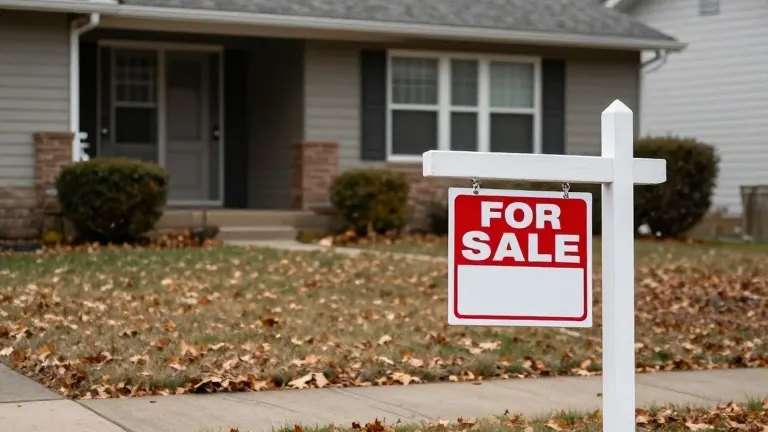
Southern California home sales at mid-year were running 3% slower than the worst periods of the Great Recession. This slowdown is pushing some homeowners to consider lease option agreements as a way to keep properties occupied while waiting for the right buyer.
A lease option typically combines a standard rental agreement with a separate contract that gives the tenant the right to purchase the home later. Real estate attorney Mike Hensley explained that the option period usually lasts between one and three years. The tenant pays an upfront, non-refundable fee to secure this right, which can range from 1% to 5% of the agreed-upon sales price or as little as $1.
The purchase price is often fixed in the contract to simplify the transaction. However, parties can agree to determine the value later using three appraisals. The buyer and seller each hire an appraiser, while a third is selected blindly from an appraisal management company. The value closest to the blind appraisal becomes the final price. For instance, if appraisals come in at $900,000, $975,000, and $925,000, the $900,000 value stands because it is only $25,000 off the blind figure, while the other is $50,000 off. Each appraisal costs the parties approximately $650.
Sellers are motivated by several factors, including immediate cash flow from a vacant property, steady long-term income, and the ability to defer capital gains taxes. They can also lock in a higher purchase price than the current market value and expand their pool of potential buyers.
Buyers must prepare their finances before signing. Mortgage rates fluctuate, and if rates are higher when the option is executed, the borrower may need a higher income to qualify. Sometimes sellers offer financing terms that are better than those available from a loan originator. Tenants often pay above-market rent, with the extra amount credited toward the down payment or closing costs. Fannie Mae requires an independent market rent survey to verify that the credit is above fair market value.
If the buyer does not exercise the option, all extra rent paid is non-refundable. The parties must also define who handles maintenance and repairs. Hensley advised that the tenant should record a memorandum of residential tenants' option to purchase with the county recorders office to protect against the seller selling the property to someone else.
Jeff Lazerson, president of Mortgage Grader, noted that in his 40 years of originating mortgages, he has seen only four such lease options. Two buyers never proceeded, either because they could not qualify or because the home value dropped and the seller refused to renegotiate. He stated that these agreements are rare in hot markets but appear in slow markets when sellers want to widen their net.
Freddie Mac data shows the 30-year fixed rate averaged 7.28%, up 17 basis points from the previous week. The 15-year fixed rate averaged 6.66%, up 16 basis points. The Mortgage Bankers Association reported a 2.3% decrease in mortgage applications week-over-week. An average 30-year fixed rate on a conforming $832,750 loan results in a payment of $5,698, which is $565 more than last year.
More Business · Scam Watch · Report a business · Got a Story?