ANC seeks smaller party alliances after historic local election defeat
The African National Congress is negotiating with minor parties to form municipal governments after suffering its worst local election result since 1994.
By News Media House Staff ·
The African National Congress, which has dominated South African politics for over three decades, is facing a critical deadline to secure power-sharing agreements in major cities. This urgency follows a significant drop in voter support during the local elections held earlier this month. The results marked the party's weakest performance since it came to power in 1994, ending the apartheid era and transitioning the country to democracy.
In the provincial contests, the ANC managed to win a majority in only one of the nine provinces, Limpopo. This is a sharp decline from the six provincial majorities it secured in the previous election cycle. At the municipal level, the party won the most votes in just two of the country's eight major cities, compared to six in 2021. Although the ANC remains the largest party nationally with 31% of the vote, this figure represents a substantial decrease from the 46% it received five years ago.
The Democratic Alliance, a pro-business party, made significant gains in the election. It captured 25% of the national vote, up from 22% previously. In Gauteng province, the economic heart of the country which includes Johannesburg and Pretoria, the DA secured the highest number of votes in both major cities as well as the Ekurhuleni region. The party also retained its majority in Cape Town and won the most votes in Nelson Mandela Bay, home to Gqeberha.
The left-leaning uMkhonto weSizwe, or MK Party, led by former President Jacob Zuma, finished third with 10% of the national vote. This result mirrors its performance in the 2024 national election, where it became the official opposition after the DA joined the coalition government. MK emerged as the dominant party in KwaZulu-Natal province, including the port city of Durban, where it received 34% of the vote. However, this outcome leaves the party dependent on forming coalitions with other groups to govern.
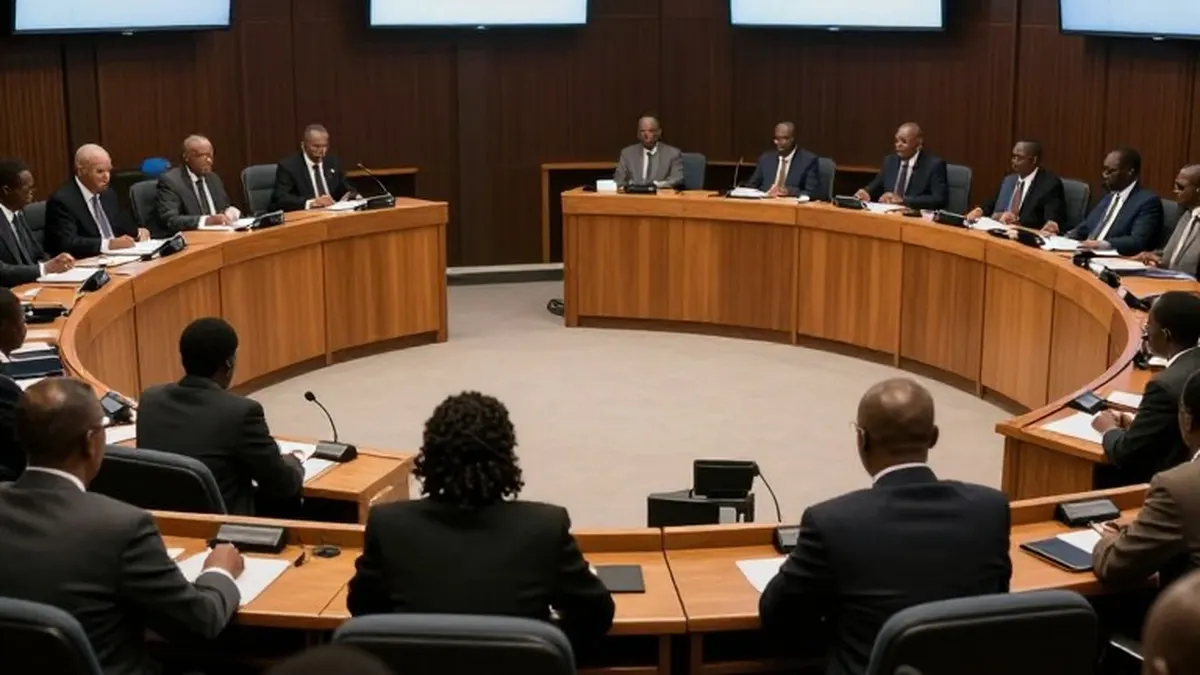
Political parties have until November 27 to negotiate and establish local governments. Despite the ANC and DA sharing power at the national level through the Government of National Unity, local officials appear reluctant to replicate this arrangement. State broadcaster SABC reported that most top ANC leaders view a partnership with the DA as a last resort. Instead, the ANC has been courting smaller parties to form municipal councils.
In Gauteng, reports suggest the ANC is moving toward an arrangement with ActionSA, an anti-immigrant party that became the third largest in the province with 17% of the vote. ActionSA is positioned as a potential kingmaker in the region. The DA has also sought deals with smaller parties and the ANC, but it appears likely to take the opposition role in Gauteng. Tensions remain high, as ActionSA and the DA have struggled to agree on mayoral candidates for Johannesburg and Pretoria.
The reluctance of the ANC to partner with the DA locally has raised questions about the stability of their national alliance. The two long-time rivals were forced into a coalition in 2024 after the ANC lost its parliamentary majority for the first time. While the national government remains intact, internal frustrations persist. A party insider told the Daily Maverick that a nationwide agreement to work with the DA at the municipal level was overwhelmingly rejected at a recent ANC meeting.
Political analysts suggest that the current situation could lead to what Andre Duvenhage calls asymmetrical coalitions, where parties cooperate in some areas while opposing each other in others. Sandile Swana, another analyst, warned that any party leaving the national coalition over local failures would be shooting itself in the foot. The decline in ANC support is largely attributed to perceptions of corruption and a failure to provide basic services such as electricity and water.
Voters are hoping that new coalition governments will improve service delivery. However, the track record of municipal power-sharing since 2016 is mixed. Half of the country's cities have been governed through such agreements, which are often viewed as unstable. In Gauteng, governance has faced scrutiny due to these unstable arrangements. Experts agree that resolving the deep-seated issues in municipalities, particularly in Johannesburg, will likely take much longer than the standard five-year term.
Duvenhage estimated that turning the ship around would require a ten-year period. Swana echoed this sentiment, stating that it would take a decade to cleanse and purify local councils and reinstate them as proper municipalities. As negotiations conclude, the focus remains on whether these new alliances can restore confidence in local governance.
Originally published by News Media House