Rubio Heads to Paris as G7 Ministers Press US on Ukraine and Iran
European leaders aim to shape US policy on Russia and Tehran during a two-day summit that was relocated from Marseille at the last minute.
By Fatima Saleh ·
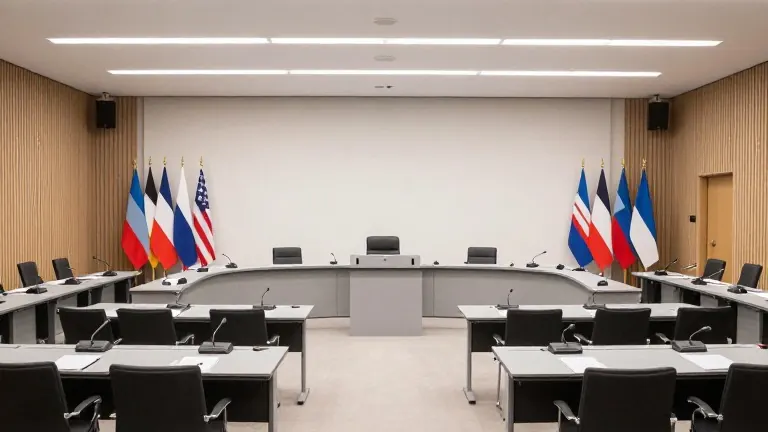
The central tension at the upcoming G7 foreign ministers' summit in Paris involves European nations seeking to influence Washington's approach to two volatile conflicts. Ministers from Britain, Canada, France, Germany, Italy, Japan, and the United States are set to meet this week to discuss Russia's war in Ukraine and the potential for further US military action against Iran. The gathering comes at a sensitive time, with the conflict in Ukraine nearing its fifth anniversary and Washington keeping options for new strikes on Tehran open following the Republican loss in the recent midterm elections.
US Secretary of State Marco Rubio is scheduled to attend both days of the conference. This is a notable departure from the previous G7 ministerial meeting held in March, where Rubio participated for only one day. His presence marks his first trip abroad since the midterm results, a period during which the US political landscape shifted with Democrats taking control of both houses of Congress. Rubio told reporters prior to his departure that such a division of power is not uncommon in the United States.
The summit was originally planned for the port city of Marseille but was moved to Paris with only scheduling reasons cited for the change. The relocation occurred during the final months of the French G7 presidency, which earlier saw President Emmanuel Macron host President Donald Trump for a leaders' summit in the resort town of Evian. France will hand over the G7 presidency to the United States in 2027. Despite the move, Marseille will still host the launch of a network of 14 global ports dedicated to combating drug trafficking, according to French Foreign Minister Jean-Noel Barrot.
European officials are focused on ensuring Ukraine is not forced to accept disadvantageous terms in ongoing peace negotiations. US-mediated talks between Moscow and Kyiv are scheduled for Tuesday and Wednesday in Abu Dhabi. Barrot stated that Europe will be represented in those discussions, with France specifically participating. He emphasized that Europeans will be present to ensure their interests are considered alongside those of the US and Russia.
The issue of Iran remains a point of contention. President Trump has not ruled out new strikes on Iran, including at the suspected nuclear site known as Pickaxe Mountain. Tehran denies the facility is a nuclear plant. Trump indicated on Friday that Iran wants to make a deal badly, while European leaders expressed a desire for a resolution that allows normal shipping traffic to resume in the Strait of Hormuz. Jared Kushner, the US president's envoy, described the US effort as working on a broader European security architecture to establish conditions for lasting peace.
On the sidelines of the diplomatic talks, the French finance ministry will host a donor conference on Monday. The event aims to raise funds for the repair of the dome protecting the nuclear reactor at the Chernobyl site in Ukraine. The structure was damaged by a Russian strike last year after the 1986 explosion. Approximately 500 million euros is required for the repairs, but just over half of that amount has been raised so far. The ministry set a target date of spring 2027 to secure the remaining funds.
Rubio addressed concerns about his safety during the trip, noting that he trusted his US counterparts on the ground in France. He stated he was not worried by widespread protests in the country. The meeting serves as one of the final acts of the current French presidency before the transition of leadership to the United States next year.