Political Upheaval: Indonesia's Vice President Resigns Amid Credential Dispute
Gibran Rakabuming Raka steps down after court rulings questioned his educational background, leaving the office vacant until parliament selects a new candidate.
By Lauren Foster ·
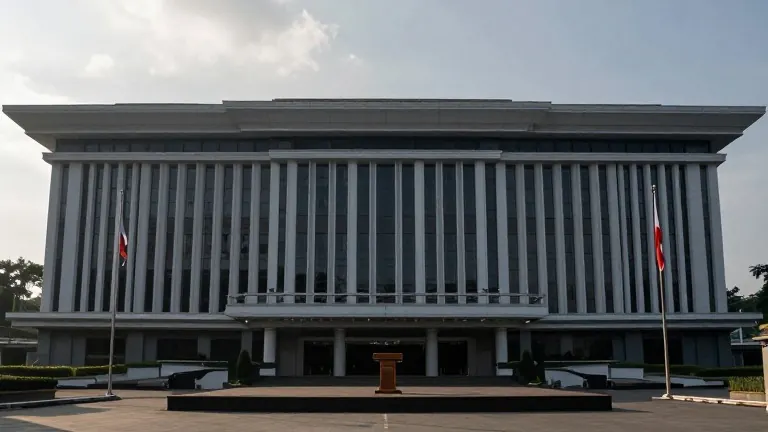
Gibran Rakabuming Raka, Indonesia's 39-year-old vice president, formally resigned on Thursday. He submitted his letter to the leadership of the People's Consultative Assembly, the nation's highest legislative body, at the parliament building in Jakarta. The move follows a series of legal and political challenges that called into question his right to hold the office. Raka did not speak to reporters as he left the meeting room.
The resignation was accepted by President Prabowo Subianto, who addressed the nation on Thursday afternoon. Subianto spoke after a meeting with Raka and parliamentary leaders at the presidential palace. He described the decision as made with a "heavy heart." The president praised Raka for displaying "courage, responsibility and statesmanship." He noted that Raka chose to step down for the greater interest of the nation and the state.
The dispute over Raka's eligibility stems from rulings by the Constitutional Court and the Supreme Court last month. Both courts determined that the documents Raka submitted regarding his overseas education did not meet election requirements. Indonesian law requires presidential and vice-presidential candidates to have completed senior high school or an equivalent level of education. Because Raka finished his secondary education abroad, he had to provide proof that his qualifications were equivalent to an Indonesian high school diploma. The courts found those documents insufficient.
The controversy has deeper roots in the 2024 election. Before Subianto selected Raka as his running mate, the younger man did not meet the constitutional age requirement of 40 for vice presidential candidates. In October 2023, the Constitutional Court issued a ruling that allowed regional leaders to run at a younger age. Critics viewed this exception as a conflict of interest that benefited Raka specifically. That decision has fueled allegations of dynastic privilege and weak political accountability.
Parliamentary pressure mounted this week. On Wednesday, 120 lawmakers from eight political parties submitted a petition to the House leadership. This action initiated a process that could have led to Raka's impeachment. The resignation effectively preempted that vote. Raka had offered to resign on Tuesday during a meeting with Subianto, stating he wanted to avoid a prolonged political controversy. He delivered the letter to the president personally on Wednesday.
Raka's father, former President Joko Widodo, commented on the situation from his hometown in Solo. He told reporters that political dynamics in public office are normal. Widodo said he had reminded his son that political positions are temporary. He added that the family will continue to support President Subianto's government, particularly programs that serve public interests. The academic credential investigation appears separate from ongoing probes into allegations that top police officials were involved in wiretapping targeting the president.
The vacancy in the vice presidency will not trigger a new election. Under the Indonesian Constitution, the office remains empty until the People's Consultative Assembly elects a replacement. The president must nominate two candidates for parliament to choose from. This selection must occur within 60 days. Speaker Ahmad Muzani said parliamentary leaders would convene immediately to begin the process. He asked for the support of all Indonesians to ensure the democratic process proceeds smoothly.
Raka's departure marks a historic moment for the country. He is the first vice president to resign before the end of a term since the fall of dictator Suharto and the start of democratic reforms in 1998. Subianto highlighted Raka's work during his two years in office. The president pointed to Raka's visits to 35 provinces and 149 regencies and cities to inspect 303 government projects. Subianto said many of the administration's achievements would not have been possible without Raka's contribution. He expressed hope that Raka and his family would find strength during the difficult time ahead.
The resignation shifts the political balance in Jakarta. The focus now turns to the parliamentary session to select a successor. The process will test the new precedent set by this constitutional transition. Lawmakers from various parties must agree on the nominees presented by the president. The outcome will determine how the administration functions for the remainder of its term.