
Nvidia slump and wholesale inflation data test market gains
Tech stocks dragged indexes lower Friday, but the S&P 500 is poised for its biggest weekly jump since August despite a new drop in Nvidia shares.
By Samuel Hayes ·
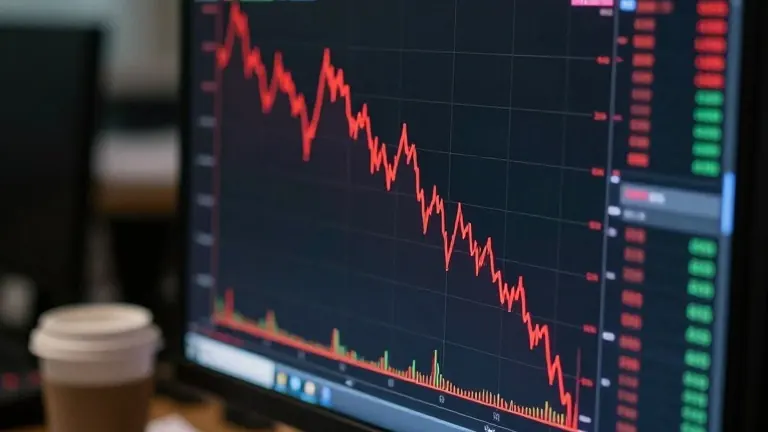
The S&P 500 closed down 0.7% on Friday, capping a volatile trading week on Wall Street.
The index is still on track for a 2.2% gain for the week. That would be its first positive weekly performance since early October and its largest rise since August. The Dow Jones Industrial Average lost 37 points, or 0.1%, by 12:36 p.m. Eastern time. The Nasdaq composite fell 1.2%.
Traders reacted to the continued decline of Nvidia. The stock dropped 3% on Friday. Broadcom fell 5.3%, and Advanced Micro Devices lost 10.4%. These companies carry heavy weight in the S&P 500, so their price drops pulled the broader indexes lower even though more stocks in the index rose than fell.
Nvidia’s stock has slipped for weeks following the resignation of CEO Jensen Huang. Huang stepped down after his relationship with a Chinese tech executive raised U.S. national security questions. Colette Kress, the company’s longtime chief financial officer, is serving as interim CEO.
Angelo Kourkafas, a senior global strategist at Edward Jones, noted the market’s reliance on a few large firms. He wrote in a research note that Nvidia’s pullback shows the risk in a market where a small number of mega-cap technology stocks drive most returns.
Inflation data released Friday showed wholesale prices cooled slightly last month but remain high. Consumer inflation is well above 3%, far exceeding the Federal Reserve’s 2% target. Energy costs from the U.S. war with Iran are pushing prices up for gasoline, food, and clothing.
Chris Osmond, chief investment officer at Fifth Third Wealth Advisors, said the data suggests inflation is moving beyond its original sources. He warned that if this trend continues, the Fed will find it harder to ignore the price pressures.
The 10-year Treasury yield rose to 5.13% from 5.10% late Thursday. The two-year yield fell to 4.85% from 4.86%. Economists expect the Federal Reserve to raise its benchmark interest rate at its December meeting to fight stubborn inflation, with another increase likely in January.
More Business · Scam Watch · Report a business · Got a Story?