Lebanese family returns to burned home after Israeli troop withdrawal
Residents of Zawtar al-Gharbiyeh face a shattered house and destroyed crops under a new U.S.-brokered military arrangement.
By Samuel Hayes ·
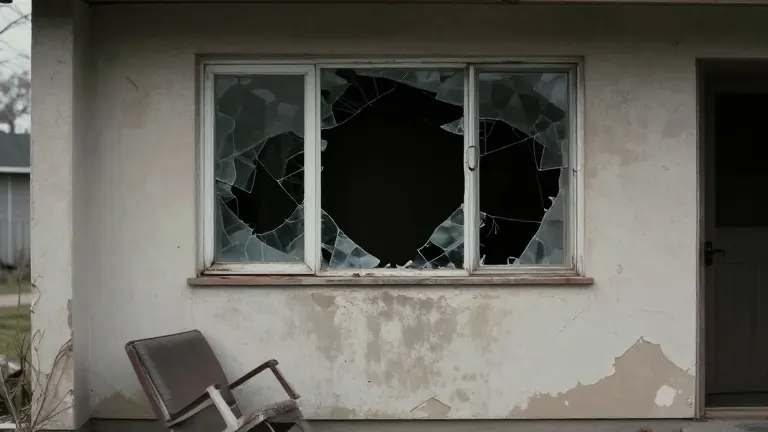
Atef Kadouh returned to his home in Zawtar al-Gharbiyah, Lebanon, in July to find it occupied by Israeli soldiers and then set on fire. The village marked the first test of a U.S.-brokered plan for Israeli forces to withdraw and the Lebanese army to take over security duties. Kadouh and his wife, Soumaya Yaghi, had lived in the house for 40 years after he saved money from two decades of work in Saudi Arabia.
The family’s youngest son, Adel Kadouh, died in March during a drone strike while serving as an ambulance driver. He was 27 years old and a sports teacher. He died alongside four other medics while they buried a 75-year-old man who had died in a hospital. Lebanon’s Health Ministry reports that Israel has killed more than 135 first responders and medical staff in the past two years.
"This one broke me," Atef Kadouh said. "He was my youngest son, 27 years old. There have been wars in every country in the world but there are rules for war … you attack a paramedic rescuing wounded people, children? He was not a fighter at the front." He recalls warning his son that Israel might not spare medical personnel. Adel replied, "Dad there are wounded children, we have to go rescue them."
The Israeli military stated that militants often pose as paramedics and transport weapons in ambulances for Hezbollah and its allies. It did not provide proof for this claim in response to the specific airstrike. The military also did not answer follow-up questions noting that the five medics were killed at a burial site, not inside an ambulance.
Inside the Kadouh house, Israeli soldiers had written their first names in blue marker on a scorched hallway wall. Appliances such as the fridge, freezer, and washing machine had bullet holes. Furniture was pushed over a second-floor balcony and smashed on the ground below. Bullet casings and a missile propulsion unit with English markings reading "propulsion unit, tactical" were found in the rooms.
Blackened fruit boxes and cans of energy drinks with Hebrew writing lay on the kitchen floor near shattered tiles. In the bedroom of the family’s 18-month-old grandson, soot from a scorched ceiling dripped onto walls decorated with hot-air balloons and teddy bears. The family had no running water or electricity because the Israeli military destroyed the solar panels.
The Lebanese army told the family that many houses in the village had been rigged with explosives when Israeli forces were present. The army said it dismantled the explosives left in the Kadouh home and others. The Israeli army said its policy bars burning homes or leaving explosives, though it did not reply to questions about why the house was damaged.
Outside, the Israeli army used a bulldozer to uproot trees, including pine trees that produced a key cash crop of pine nuts. The family’s garage and tractor were also demolished. "We are back to square one," Kadouh said. "Starting from scratch." His wife, Yaghi, points to where olive, fig, and avocado trees once stood, as well as fields of thyme.
The family feels abandoned by the Lebanese government. "Our homes were destroyed and no one came to check on us," Kadouh said. "Not the Lebanese state or outsiders or the parties." He noted that the Lebanese army is intentionally underequipped to avoid threatening Israel, leaving a security vacuum that groups like Hezbollah and Amal filled for decades. "The Lebanese state never sent a soldier here to protect us," he said.
Smoke rises from a nearby village where Israel continues to attack despite the ceasefire. Kadouh said he does not expect peace in his lifetime, particularly with Israeli Prime Minister Benjamin Netanyahu in power. "Netanyahu is the one who killed my son. Let him bring back my son," Kadouh said. "If they want to be our neighbors they should do good. Instead they burn us."
More News · Greensboro news · Report a business · Got a Story?