Cincinnati hippo dies after swallowing hat
Vets explain why a multichambered stomach makes objects like hats and coins difficult to remove.
By Samuel Hayes ·
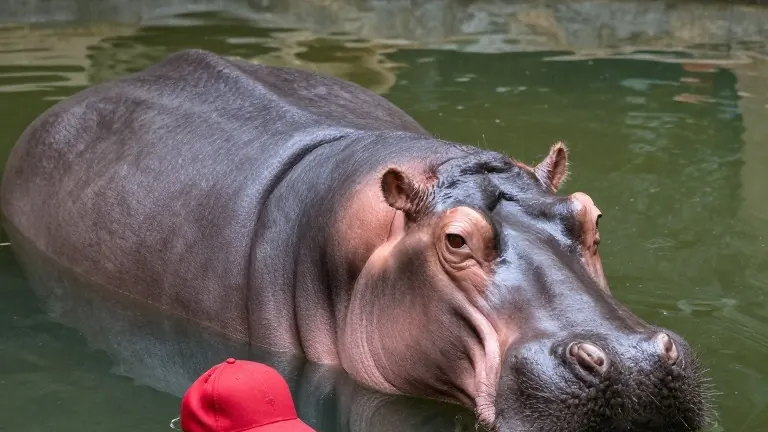
Fiona, a nine-year-old hippopotamus at the Cincinnati Zoo, died Thursday after swallowing a hat that had fallen into her habitat. The zoo stated the hat lodged in her small intestine, making surgery impossible. Director Dave Jenike said in a statement that his team did everything possible to save her, but her body could not continue fighting.
Foreign objects frequently enter animal enclosures, sometimes dropped and sometimes tossed. In 2024, staff at Omaha’s Henry Doorly Zoo and Aquarium removed 70 U.S. coins from an alligator. The following year, a Komodo dragon at the Memphis Zoo ate a shoe thrown into its exhibit. In both cases, the animals survived after the items were recovered.
Dr. Gabriella Flacke, an associate veterinarian at Zoo Miami, noted that staff have also retrieved cellphones from alligators. She explained that smaller items are often removed endoscopically, where a camera passes through the mouth to grab the object. Larger items require surgery. Flacke said recovering objects from an alligator is easier than from a hippo because alligators have a single stomach divided into two parts, while hippos have a multichambered stomach.
Dr. Jen Quammen, president of the American Veterinary Medical Association, said the difficulty often lies in the twists and turns of the digestive tract rather than just the size of the object. He told NPR that the physiological path an item must travel can complicate retrieval. Quammen also emphasized that animals have specialized dietary needs provided by caretakers.
Flacke urged visitors to follow zoo etiquette by avoiding loud yelling and not throwing objects at animals. She advised keeping sunglasses off heads when leaning over barriers and watching children who might toss toys. “Anything that we bring that could inadvertently end up in the animal exhibit or somehow around the animal, try to just be mindful,” she said.
Both veterinarians warned that the risk extends beyond zoos to wild and domestic animals. Quammen said animals explore their environment by putting things in their mouths, which makes them curious about dangerous items. He recommended disposing of trash properly and storing human medicines where animals cannot reach them. “Don’t feed an animal without permission and that includes our pets at home, but also wildlife,” Quammen added.
More News · Greensboro news · Report a business · Got a Story?