ICE enforcement expands across the U.S. as November elections approach
Local officials and volunteers report a sharp increase in agent activity in several cities, while early voting numbers rise in targeted communities.
By Fatima Saleh ·
Immigration and Customs Enforcement has increased operations in multiple U.S. cities during October, according to reports from local media and community groups.
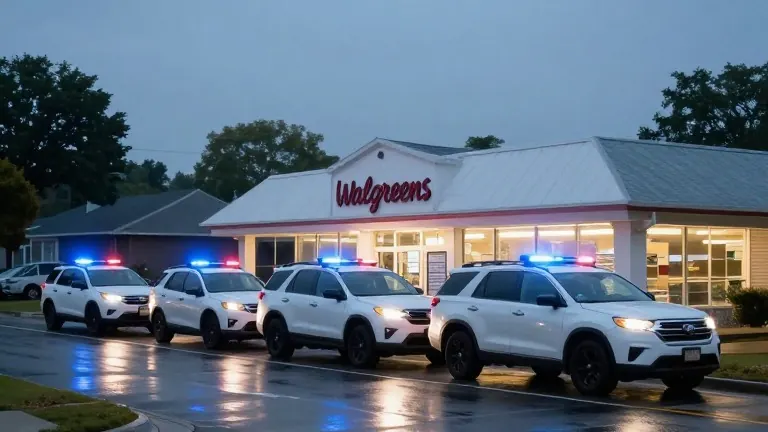
In Dover, New Jersey, Councilwoman Sandra Wittner received messages early Wednesday morning indicating that a dozen or more agents were gathering outside a Walgreens. Residents across north New Jersey reported seeing a spike in enforcement activity throughout that day. Wittner said she was unsure who was detained or where, a common challenge because the Department of Homeland Security no longer publicly shares timely information on its operations.
NPR and its member stations have gathered reports of similar surges in enforcement in rural Illinois, Oregon, Detroit, and California. An official in New York Mayor Zohran Mamdani's office, who was not authorized to speak publicly, confirmed that the city has noted a rise in ICE activity. A volunteer neighbor in New York, who asked not to be named out of concern for retaliation, stated that her group has witnessed an uptick in activity since the summer. She described seeing numerous large operations, or cluster raids, where multiple agents move from one location to the next.
Troy Brynelson, a reporter for Oregon Public Broadcasting, noted that ICE activity in Portland picked up in early October and continued through the month. He said the activity appears concentrated in commercial areas and represents a noticeable increase compared to the summer. Wendy Weiser, a researcher at the Brennan Center for Justice at NYU Law School, said the administration's tactics appear designed to intimidate voters. She noted that while there was apprehension and fear in communities like Dover, early turnout is currently surging.
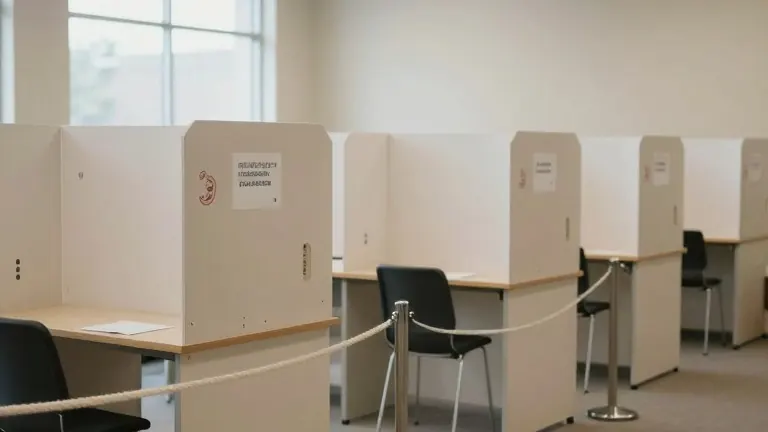
Juan Proaño of the League of United Latin American Citizens expressed concern about the timing of these actions. He said the focus is on ICE presence at the perimeter of polling stations rather than inside them. Proaño argued that mass enforcement actions, combined with social media coverage, could dissuade voters from going out to vote. Weiser countered that there is no indication the raids are affecting turnout. She said Americans are tuning out the intimidation and that participation is rising sharply in minority and Latino communities.
DHS responded to a written inquiry from NPR by stating that ICE agents uphold immigration laws in all 50 states, seven days a week, and 24 hours a day. The agency did not explicitly confirm or deny a recent surge in activity levels. Weiser added that while intimidation at the polls is illegal, she has not seen a significant drop in participation. She described the current trend as a failure of the intended intimidation strategy, noting that targeted communities are voting at high rates.
The next major milestone is the midterm election, which will serve as the primary test of whether increased enforcement activity impacts final voter turnout. Local officials will continue to monitor agent deployments in the weeks leading up to Election Day.
Source: Central Florida Public Media