Households in five countries stockpile goods for emergencies
Residents in Sweden, the US, Japan, and the Netherlands describe how they maintain supplies for crises, ranging from three months of food to 72 hours of essentials.
By Fatima Saleh ·
Households in Sweden, the United States, Japan, and the Netherlands have built personal crisis kits in response to government guidance or personal experience with disasters. The stockpiles vary widely in scale and content, reflecting the specific risks each family faces. Some residents keep supplies for days, while others prepare for months.
In Stockholm, Andreas Wennerberg, 30, began his preparations after a government booklet arrived at his home two years ago. The publication detailed actions to take in the event of a crisis or war. Wennerberg now stores a crank radio, 10 liters of water, and approximately 170 pounds in cash in his basement. He describes the booklet as a wake-up call but says he has not followed all recommendations. "I feel secure.. I'm not that worried," Wennerberg said.
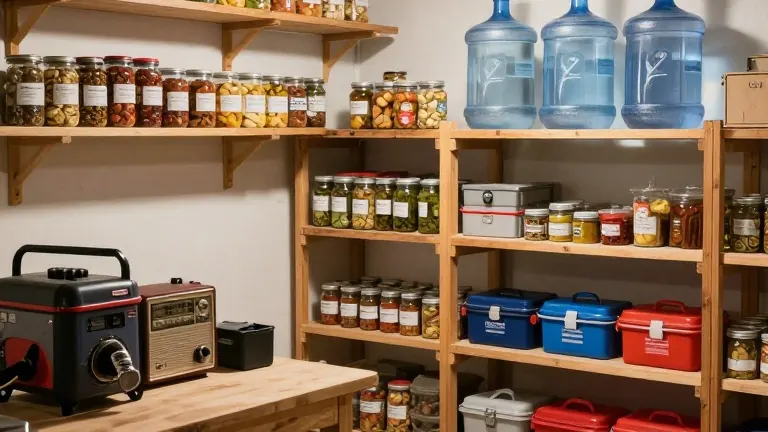
Dan C, a 38-year-old physiotherapist in Maryland, has invested about 6,000 dollars in emergency supplies for his family of four. His basement shelves hold 150 gallons of water, chlorine dioxide tablets, and long-life food items such as oats, quinoa, and peanut butter. He uses a rotating pantry system, consuming older items and replacing them to prevent expiration. The stockpile is designed to last three months. Dan also owns solar panels, a camping stove, a tent, and a propane fireplace insert that operates without electricity. He cited a previous two-day power outage during a cold February as a motivation to fill gaps in his preparation.
Ayumi T, a 27-year-old university employee in Tokyo, keeps an emergency rucksack in her wardrobe. The bag contains clothes, towels, menstrual products, disposable chopsticks, and a portable toilet. She expanded her supplies after an earthquake in 2024 caused widespread damage to Japan's Noto Peninsula. Her family reviews and updates their kits every New Year, replacing expired food. Tokyo's government provides a 68-page disaster prevention guide that outlines specific items to keep.
Nicole Bonds, a 48-year-old leadership coach in Atlanta, Georgia, has been accumulating supplies over the past five years. She attributes her vigilance to increasing severe weather patterns. Her stockpile includes cleaning products, batteries, a power bank, first-aid supplies, rechargeable fans, and blankets. Bonds keeps these items under her bed and in her kitchen cabinets. She buys supplies in small increments to manage costs, describing her approach as picking up items here and there.
Michael Stuut, 39, lives in Hoorn, Netherlands, in an area below sea level. He prepares for extreme weather and potential conflict. His supplies are stored in the attic and a crawl space beneath the house. The crawl space contains 120 liters of water, cash, a first-aid kit, and a generator. Stuut also owns a Starlink Mini satellite device for internet access. In late 2025, Dutch authorities launched a campaign advising households to maintain 72 hours' worth of supplies. Stuut created an application this year to track his food supplies and expiration dates. His wife initially doubted the need for such preparation but now supports the effort. They tell their five-year-old son that the supplies are for days when they do not wish to visit the shop. "Being prepared isn't about panic," Stuut said. "It's about being the calm one when the lights go out."
In the United States, the Federal Emergency Management Agency advises residents to assemble emergency kits and develop family plans. In the UK, sales of tinned food, radios, and torches increased after the government issued similar stockpiling advice.
Source: BBC News