Danish engineers route AI server heat to local homes
A new liquid cooling system at the Bitten supercomputer diverts thermal energy from AI processors into the municipal grid for 75,000 residents in Sonderborg.
By Fatima Saleh ·
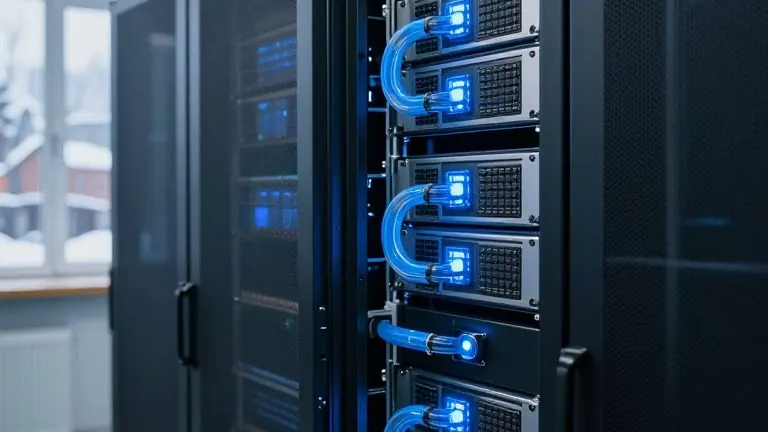
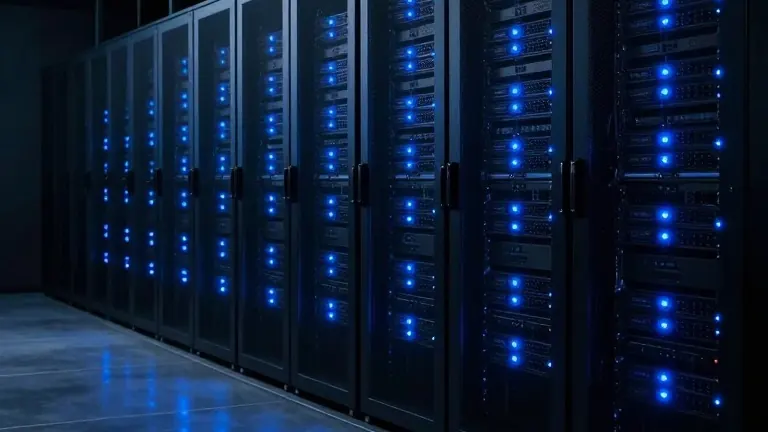
Danfoss, a Danish engineering firm, has implemented a liquid cooling system at the Bitten supercomputer that captures 100 percent of the waste heat generated by AI processors. The system diverts this thermal energy into the local district heating network instead of venting it into the atmosphere.
The Bitten supercomputer, which launched in May 2026 at the University of Southern Denmark in Sonderborg, serves as the primary AI resource for academic research in the country. Its processors run continuously, generating intense heat as they handle deep data analysis and scientific simulations. Danfoss replaced traditional air conditioning and fan systems with a liquid coolant pump that flows directly over the high-temperature chips.
The recovered heat is channeled into Sonderborg’s municipal infrastructure to warm the homes of 75,000 residents. Kristian Strand, president of Danfoss Climate Solutions, explained that every digital action, such as uploading a document, activates data center processing that creates heat requiring removal. Strand described the system’s output as a tap of hot water that can heat homes and support industrial processes.
Data centers globally are straining energy grids and water resources. The International Energy Agency reported that these facilities consumed 485 terawatt hours of electricity in 2024, equivalent to 1.5 percent of the world’s total energy supply. This figure is projected to double to 3 percent by 2030, with AI development driving a large portion of that growth. The United Nations Economic Commission for Europe has labeled the expansion of AI hyperscalers a growing threat to electricity systems worldwide.
The heat recovery technology addresses a major inefficiency in industrial energy use. Danfoss calculated that heat wasted across Europe in one year could power the city of Paris for 48 years. Roughly two-thirds of the world’s energy is expelled as excess heat. In the United States, which hosts about 4,000 data centers and uses 5 percent of the nation’s electricity for them, very little heat is recovered due to a lack of local infrastructure to utilize it.
Jan Rosenow, a professor of energy and climate policy at the University of Oxford, argued that data centers should be built where their heat can be utilized rather than where land is cheapest. He noted that Scandinavia leads in capturing this energy. Meta’s data center in Odense, Denmark, recovers around 100 gigawatt hours of heat annually, enough to heat 6,900 homes. Stockholm, Sweden, has fed data center heat into its network since 2014.
Danfoss is applying similar waste heat capture methods to other sectors, including supermarkets, factories, and wastewater plants. The company recently replaced two gas boilers at Sonderborg Hospital with a heat pump system. This new setup captures waste heat from medical equipment such as MRI scanners and temperature regulation systems in operating rooms.
Lasse Bo Madsen, head of technical services at Sonderborg Hospital, stated that the project will pay for itself within two years. The hospital is now energy independent for nine months of the year and can feed surplus heat back into the district network. This reduction in heating costs allows the facility to allocate more funds to patient care and new equipment like scanners. Strand called the technology a vast untapped energy source that reduces reliance on fossil fuels while improving business efficiency.